Showing posts with label Group A. Show all posts

Tuesday, April 3, 2018

Group A Post 4: Magical Realism and Gabriel Garcia Marquez by Bailey West

Gabriel Garcia Marquez is well known for incorporating magical realism into his work. Magical realism is present in stories that are anchored in reality but have elements of fantasy. According to Caroline Lee Schwenz in her article "Magical Realism", it "differs from pure fantasy primarily because it is set in a normal, modern world with authentic descriptions of humans and society". Marquez is known for using this in his stories; "A Very Old Man with Enormous Wings" is no exception. In this short story, Marquez uses magical realism to incorporate a supernatural creature into reality. How they treat this creature says a lot about the "othering" effect and how we treat people that are different from us. We tend to exaggerate differences between each other as an excuse to ostracize the new person.

In many ways this story makes a statement about how we treat people that are new or different to us. Marquez uses magical realism to do this by introducing a supernatural creature. This creature is unique because it's mostly man. Although he startles Pelayo and Elisenda at first, they "very soon overcame their surprise and in the end found him familiar". This shows that we are able to recognize humanity in each other. However, the old man is stuck in a constant middleground. He is not a person, but the priest doubts that he's an angel either. Instead of focusing on the human parts they did see of the old man, they couldn't get over his huge wings. People gathered around him and threw food at him "as if he weren't a supernatural creature but a circus animal". According to the story, "even the most merciful threw stones at him". Even if we are able to see some humanity in people that are different from us, it is often derailed by the differences.

Image result for a very old man with enormous wings

A closer look at the man exposes even more of his humanity. When Pelayo got close to the man "he noticed that seen up close he was much too human". This quote alone says a lot about humanity. Once we see each other up close- once we really take the time to look and relate to each other- we can see the similarities. It becomes much harder to ignore. This begins to have an impact on the family as the crowd dwindles and the old man remains in the chicken coop until it collapses. They keep him at a distance but they allow him to stay. This leaves us with some hope about humanity; maybe we can notice more similarities than differences.

We often focus on the differences and exaggerate them; we marvel at or make fun of these differences. We make a show of it. Marquez shows this by inventing a supernatural creature to bring out these traits of humanity and expose how we treat something that is so similar to us but also different. However, the ending implies tentative hope. In the end maybe the similarities can outweigh the differences. Maybe we can learn to accept each other and live in peace.

Scholarly Article: https://scholarblogs.emory.edu/postcolonialstudies/2014/06/21/magical-realism/

Group A, Post 4, Omelas and Wage Inequality by Carter Messner

For my final post, I'm going to be writing about the text "The Ones Who Walk Away from Omelas" by Ursula K. Le Guin. This story I believe had the most impact on me, and I feel like the message of the story should be used as a societal norm for how we live our lives. This story is about a society that is perfect, and just like most stories about utopias, there is a dark secret that is revealed. The secret being that a young child is being tormented, and the only way for the society to stay perfect, is if the child is never treated kindly. The people in the town who have seen the kid are forced to decide for themselves if they can live in happiness knowing that there is someone in the worst conditions imaginable, or will they leave the town to go anywhere else. The ending of the story is the part that made me think about how our society, specifically the rich, treat others who are supposed to be equal with them, and if the system we have now is really for the good of all people. It ends by talking about the people who decide to leave, "But they seem to know where they are going, the ones who walk away from Omelas.", which is powerful to me because these people are standing up for what they know is right, even if it might bring them harm. I would like to see more people stand up for the right things in this world because the pain of one should be enough the change the mind of a collective. 

We are living in a society that has an idea of an "American Dream", yet you are more like to have an "American Dream" story come out of Canada. That is because the United States, when compared to 24 other countries, "ranks 16th in the amount of intergenerational earnings mobility." (Corak). This means that children that grow up in poorer households are finding it harder to be able to move up out of this poverty, in other words they are unable to "pull themselves up by the bootstraps" as politicians like to say, and there is nothing the children can do about it. We have problem in this country where the poor keep on getting poorer and the rich keep getting richer, and unlike the people in Omelas who know that their privilege comes with the pain of another being, the rich in this country do not care about the children who go hungry every night, or the veterans that are living on the street who fought for this country. No, the rich buy politicians to do their bidding, knowing that the tax cuts promised for the middle-class and poor, are going right in the pockets of the billionaires. To tie it back together, I want the billionaires to be held accountable for buying our government and turning it into an Oligarchy. Just like the people of Omelas, the rich know that their corruption is hurting many people, but unlike the people of Omelas I guess they don’t have the morals to stop. I believe that if we act more like the ones who walk away from Omelas, to be able to not accept when other people are treated unfairly even though your life may be unaffected, is a good start to fixing the inequality in this country.jj

hCorak, Miles. "Economic Mobility". The Stanford Center of Poverty and Inequality. (2016) 
 ult/files/Pathways-SOTU-2016-Economic-Mobility-3.pdf

https://inequality.stanford.edu/sites/default/files/Pathways-SOTU-2016-Economic-Mobility-3.pdf

Monday, April 2, 2018

Group A, Post 4: Teaching Success by Aly Hernandez


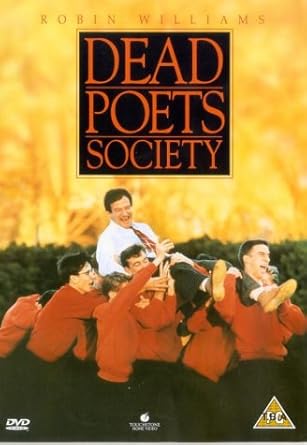
Robin Williams is one of the most recognized names in cinema due to his involvement in Jumanji, Night at the Museum, this list goes on and on.  One of his films, Dead Poets Society filmed in 1989, has touched many people of different backgrounds. The film takes place at a prestigious private school for young boys where the new unconventional teacher Mr. Keating (Robin Williams) has begun to teach English for the academy. Mr. Keating is a unique type of teacher who chooses to stray from the traditional education path that many of his colleagues have taken.
Image result for the dead poets society

Traditional education as portrayed in the film is teaching students through strict discipline and compliance to the system focused on training students to absorb the material they are being taught. In a way the traditional teaching way is meant to teach students to not question authority and instead accept authority, the rules, and to conform with the way things are and have been. The alternative and unconventional teaching methods were opposite of the traditional. The students, as Mr. Keating portrayed, were free to think for themselves, question authority, and to be individuals.

One of the most memorable aspects of the film itself was the unconventional teaching methods that collided with the traditional teaching methods accepted by the faculty at the school. Both methods attempted to yield different outcomes for what “success” means to various students. One of the questions the film poses for the audience is the following: Does conformity equal success?

Conformity in the film is an important area of interest. In an early scene, the students are seen reciting the school mantra “Tradition, Honor, Discipline, and Excellence”. In a way, the students are portrayed as robots, monochromatic by the same color of their uniforms, and extremely bored by the sound of their dull voices.  Their entire education in this school, by the cinematic portrayal of this scene, is meant to be the same because in this “training” they all share the same concept of what success is, which the teachers and parents identify as being an academically strong student, getting into an Ivy League school, and obtain a great job.

Defying conformity is also prominent, in an early scene where Mr. Keating introduces himself on the first day, the students learn to view life through a different angle by standing on their desks. He then has one of them read from the first page of their poetry page which attempts to mathematically graph good poetry from bad poetry. To express his disdain to this concept, Mr. Keating has the students tear out that page and many more. The students hesitate since the idea of ripping pages out of a textbook is almost “taboo”, but eventually the students begin to enjoy it.  This scene also introduces the idea of career aspiration such as Doctors or Lawyers and introduces the students to the importance of other aspirations such as artistry, poetry, and passion. In its own way, society labels medical and legal careers as superior to artistry, Mr. Keating did not attempt to destroy that idea rather he intended to show them that there is more to the world and themselves than being doctors or lawyers.

Dead Poets Society Movie: Scene #2
(A picture of a scene where Mr. Keating teaches the students to look at life and learn through a different perspective in order to defy the ordinary)

The film also introduces the good side of conformity by introducing the father of Neil Perry. Neil wanted to be an actor, but his father would not allow it and wanted his son to pursue a “real” career. Conformity in this sense was needed as his family was not wealthy and his father only wanted his son to have the financially stable future that he did not. This kind of conformity was honorable and necessary for the family.

Mr. Keating was an anomaly at the school who challenged his students to think beyond what is expected of them and to find their own expectations of themselves. Conformity, in my opinion, does not equal success. Traditional teaching methods do not work for all students and should not be modeled to make everyone alike. In an essay titled “Reclaiming the Social:Pedagogy, Resistance, and Politics in Celluloid Culture”, Henry Giroux argues that the culture of the school does not expect the students to know how to think on their own but rather the parents and faculty there create a culture where the students are expected to be members of the elite. In other words, they are expected to be powerful, privileged, and wealthy leaders of tomorrow. Mr. Keating, disrupts that culture by introducing free thought to the students. Being the minority amidst an entire body of faculty and parents who disagree with his unorthodox teaching practices, Mr. Keating ultimately does not last long in the school.

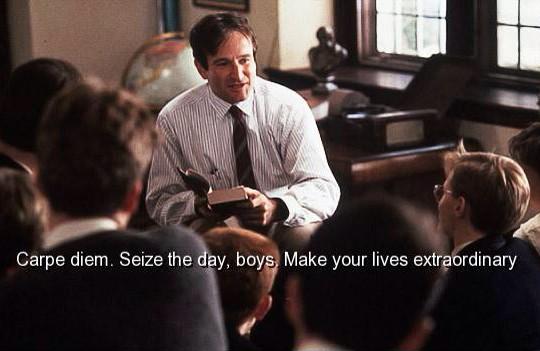
The phrase Carpe Diem or Seize the Day, frequently used by Mr. Keating is unorthodox and goes against the conformist views of the school and parents. Carpe Diem refers to the spontaneous, and the students are encouraged to worry less on the future and live in the present thus stating that success is only limited to what you allow it to be. Giroux also states that the older generation and the younger generation have different views on what success truly means when interpreted by both. This is true because the older faculty are only focused on teaching their way to the students, any other way is unacceptable. Because of this, the students never considered the idea that there may be different ways to do something, to be successful, or to learn. 

Related image

Does conformity equal success? The answer is no but yes. There are many ways in which one can view conformity as a terrible ideology yet in the case of Neil Perry’s father, conformity was essential for him and his family to succeed. I think today in our day and age both traditional and alternative teaching practices are acceptable and can be understood. Both ways can lead to success.  No student is identical, and some are more similar than others. Essentially, success is subjective and teaching to bring out individuality is possible just as teaching conformity is possible as well.

Group A - The Veldt and the Digital Divide - Brandon Ince

          There comes a time in every person's life, when our brain cells become old and crusty, the synapse fires considerably slower and ideas and concepts that seem used to be easy to understand and wield become foreign and devilishly inscrutable. With old age we become wise and experienced but with that the trade off is flexibility and aptitude to learn. Not to say that we all invariably become obstinate walls of hard held beliefs, more to say that we are not the metaphorical information sponges which we used to be. It becomes more difficult to learn, but despite that the world keeps turning.
         Everyday, and now faster than ever, new technologies around the world are being developed for the betterment of humanity, these inventions by and large do succeed in bringing about a better, or at least more advanced civilization. However, the rate in which they come out coupled with a human being's increasing learning deficiency results in some people, or even entire generations, being left behind. This is not a new thing, generation gaps have existed before and by golly they will exist in the future. However still, the generation gap that is occurring now with the advent of the internet, smart phones, and the damnable invention known as Windows 10, is special. Known today as the "digital generation gap" or for those admirers of alliteration simply "digital divide", is the supposed gap between the younger and older generations as a result of the former's ability to more easily adapt and faster and more successfully to technology than the latter. As our world advances in this technological direction, the risks of being left behind are becoming more and more severe and the need to be technologically literate becomes more and more necessary in order to be a functioning contributor to society. Being unable to handle a computer is a very dangerous social position to be in, one can be surpassed, outdone, and even taken advantage of by those why understand the system better. Ray Bradbury's The Veldt is story that explores the most hyperbolic consequence of this such situation.
         In this story a father, George, has invested in and moved his family into what is known as a "happy life home" in which every aspect of the house and even life (to an extent) is automated the the miracle of modern technology. This sounds rather nice in theory but the actual living experience for him and his wife, Lydia, proves to leave something wanting, they become more and more uncomfortable in this house to the point where they want to turn the whole thing off. Contrast this to their kids, Peter and Wendy, who seem to be thriving in this marvelous tech-house. Especially fixated on a certain room known as "the nursery" the purpose of which is to create a virtual reality space in which to manifest whatever the users fantasies may be. The kids demonstrate a mastery of control over this space, creating worlds of Aladin and Alice in Wonderland with ease, meanwhile George can't seem to make it manifest anything other than an African veldt populated with bloodthirsty lions. Ultimately, this image of the veldt isn't of George's doing at all and is in actuality a volition of the children, which in the end is used by the children as a tool to kill(?) George and Lydia.
         This story, hyperbolic as it may be, is a cautionary tale albeit about raising proper children, but also about the dangers of living in a system you have no grasp of and worse still living in that same system with a person who knows it all too well. Ignorance will always be a source of vulnerability, but if one is completely oblivious to the workings of a unit in which they literally live in - then one is certain to have a bad time. This is not too different from life in our current culture. We are, for better or worse, totally dependent on technology. In the same way George is hamstrung by his children in his own home is the same way folks can get hamstrung in life by children who understand the digital landscape better. It's like being a part of a hunter gatherer society, he who shoots best gets the most food, and if you don't even know what a bow is then you're at a considerable disadvantage.
         It's not all gloom and doom - well a situation like that would certainly be pretty bad - but there's nothing really indicating that we're anywhere even close to a society where the older generation is completely run over by the younger by any means. A study published in 1998 showed that a high majority (97%) of faculty at a given institution had access to and was proficient in handling the internet and all of it's useful tools. 97% is a fine number, and in 1998 using such tools was not near the requirement that it is today. As a society we seem to be doing fine in regards to computer literacy.


Except Windows 10 truly is incomprehensible.

Sources:
Kelty, Nina. “Educational Technology Research and Development.” Computer Proficiency: The Digital Generation Gap, pp. 46–61., doi:10.1007/11423.1556-6501

Tuesday, March 13, 2018

Group A, Post 3: Fear in Flint Town by Bailey West

In the past year, Flint, Michigan has been in the media because of its water crisis. The city's water was found to have lead in it due to insufficient water treatment. A state of emergency was declared in 2016 for the city. This incident brought national attention to Flint, Michigan. However, the water crisis hasn't been the only problem the town has faced. According to FBI statistics, Flint is in the top 10 most violent cities in America.  I started watching a show called Flint Town which follows the Flint Police Department as they try to lower the crime levels in the city. As I've seen throughout the show, there are many elements of fear in the city of Flint. Racial tension, police brutality, and a low budget increase the fear between police and civilians.

Image result for flint town tv show
(https://usa.newonnetflix.info/info/80156688/s)

According to the Statistic Atlas, 54.8% of Flint's population is black. Although there are people of color on the police force, including the police chief, racial tension between police and civilians runs pretty high. In one episode, about five officers were dispatched to a house where they took possession of someone's car. The citizens were angry and talking to a female officer who was white. One of the civilians remarked about the officer, "Well, she's white. She can do whatever she wants. They're all white". The camera then panned out to show the rest of the officers at the scene- most of which were black. Clearly the woman was probably just taking her anger out on the situation. However, this is an example of how race is connected in many instances between officers and citizens. This tension contributes to the fear of each other that is amplified by other factors. Over the past few years, police brutality has been a relevant topic on social media and news cycles. Police brutality has been evident for decades and there are legitimate cases of this. Police officers are not immune to bias; they are citizens themselves. It's completely possible for biased people to come into positions of power. However, this series shows the perspective from police officers. In the show, various black officers admit that police brutality is a problem in America but it's not always what it seems. Overall the police force in Flint seems worried that media sources latch onto these situations as a source of profit instead of legitimate change.

Low budgeting also contributes to the overall fear between officers and citizens of Flint. The show talks a lot about how low the budget for the police department is; they only have about 100 officers to patrol the whole city. Police officers often aren't able to get to all the calls they receive in one day. The show also mentions that many police officers have to report to dangerous calls alone when they should have a partner for safety. In one episode, a group of mothers were outside with their children and a group of people come around shooting off guns randomly. They call 911 multiple times over the course of several hours and it wasn't until later that day a police officer was able to respond. The citizens showed clear distaste for the amount of time they had to wait. Many citizens don't understand the financial shortages of the police department; they think that officers just avoid high crime areas. They are worried about the crime and danger in their neighborhoods, which is completely understandable. This misunderstanding just amplifies the divide and fear between citizens and police officers.

There are various circumstances that combine to create fear between citizens and police officers in Flint. Just a few of them are racial tension, police brutality, and low budgeting. Overall, this show has opened my eyes. I think that it's very important to look at things with open eyes and to always be critical. I've realized that nothing is immune from bias. One of the most important things the show exposed me to is the crisis in Flint and similar cities. These cities are highly divided because of people's fears of each other. A lot of these fears are based in bias and misunderstanding. The police department in Flint initiated a program to try to build a bridge between the divide. They created a volunteer unit so people could see the daily activities of police officers. They encourage openness and suggestions on how to be better. Hopefully programs like this provide a step towards change for citizens and officers.


Post 3 Group A: Race as a Dollar Sign by Aly Hernandez


The Bronx Slave Market by Marvel Cooke introduced the topic of racial controversial discourse prevalent before the 1900s, during the 1950s, and significantly present in our day and age. Many who fail to understand the intricate weaving's of American racism often ask themselves “Why is racism even a conversation anymore? With all the programs such as affirmative action in place to help minorities assimilate, why are we still talking about racism?” The question I pose and attempt to answer in this post is this: “Why is The Bronx Slave Market just as important now as it was in the 1950s”?

Here we go…

First, I would like to bring up a book I read a few years ago, The Other Wes Moore by Wes Moore. This book attempts to address a serious problem in African-American youths - the disproportionately high amount of poverty and crime afflicting black communities. How could two people by the same name, from similar backgrounds and neighborhoods, born within a few years from each other grow to have two completely different lives from one another. One is a Rhodes Scholar the other is in prison for murder other crimes. In one of my favorite quotes throughout the book, Wes Moore writes, “This book is meant to show how, for those of us who live in the most precarious places in this country, our destinies can be determined by a single stumble down the wrong path, or a tentative step down the right one.” In this, Moore seeks to provide his readers with an essential life lesson of precaution and awareness. By reading his book, experiencing his life and the other Wes Moore’s life, the reader is already taking measures into taking a step down the right path, but that is easier said than done. Although Moore does provide the readers with an abundance of resources to help in the end of his book, the choice to do better is often a difficult one than imagined. It is difficult because while we all hate to admit it, money is the fruit to our success in this country. You either have it or you don’t and if you don’t you have to find a way to get it. The American dream is drilled into us and our ideas of success. The means to success are too often difficult for some to obtain. Crime is often committed in the absence of money and providing for the necessities in life often proves to be a challenge for a disproportionate number of minorities.

The same ailments that plague the lives of many impoverished African-American youth affected the women of the “Paper Bag Brigade”. They too worked for a lower wage than the minimum wage, often working below their means; after all some money is better than no money. When jobs ran low, what then? One of the fears that Cooke had for the women of the “Paper Bag Brigade” was not that they would work for less than the value of their performance and worth, but that they would succumb to prostitution. Is this not a similar situation in which many minorities such as The Other Wes Moore find themselves? Again, this is simple survival trying to make it paycheck by paycheck. The Bronx Slave market still exits re-branded under a different face known as the mass incarcerations of African-Americans. Bruce Western and Christopher Wildeman write that “Age, race, and educational disparities concentrate imprisonment among the disadvantaged. Figure 3 shows trends in incarceration rates for young black and white men with different levels of schooling”.  That graph demonstrates the contrast between white and black incarcerations based on levels of education. It is important because while we are having the highest incarcerations, a large portion of our incarcerations are blacks. This is the new American slave market where prisons are literally getting funded by the number of inmates they can get. The motto goes that the darker the inmate is the larger the cash flow and such as system is revolting and sickening.

They take their labor, pay them next to nothing, take their liberty, and their hope for a brighter future. When it gets tough it becomes easier for the children of minorities, the children of immigrants, and the children of poverty, to enlist the help and benefits of the criminalized path to success.
So then…Why is racism still important?

Because it makes white people uncomfortable. We live in a system that steadily gives resources to white people at the complete expense of African Americans. The system that takes their labor, their thoughts, their culture, their rights, their freedom, and their music to re-brand to give to white communities. Almost identical to the Bronx Slave Market where the women were stripped of their labor, their freedom, their thoughts, and their rights. You cannot move on from the past until the same group that is being oppressed is given the necessary resources to assimilate and prosper without fear of any kind of reprisal from others who feel threatened. It is important because a large group of people are being incarcerated and used for money and it is not okay.


Monday, March 12, 2018

Group A - Post 3: Akira - The Past, 1988, the Future, and the Music That Ties Them All Together - Brandon Ince


         Akira. Where to start with Akira. It's one of those phenomenons that comes around only once in lifetime. Lucky for me it came around before my lifetime even started so looks like I'm slated for at least one more of these course altering occurrences. For the uninitiated Akira is a 1988 film written and directed by Katsuhiro Otomo based off a manga of the same name. Set in a distorted, cyberpunk, near future version of Tokyo, the story follows disgruntled youth Shotaro Kaneda as he tries to navigate his way through this mad world that seems to be falling apart at every seam three steps ahead of him. Akira was a highly ambitious film, with the goal to equal the quality put forth by the original 2,000 page epic, the film was allotted a budget of over one-billion yen which was outrageous for the time. The investment paid off, as the film is cited on regular occasion as one of the greatest animated films of all time. In a time of notoriously "lazy" animation, where characters were wont to only move with the absolute minimal amount of motion necessary, Akira dared to explode with highly dynamic and complex motion. From detailed facial animations to surprisingly deep animated foreground/background interplay - Akira had it all and then some. As complex as it's animation was, it pales in comparison to the complexity of the themes. Drug abuse, genetic engineering, religion, civil unrest, political corruption, the meaning of life, spirituality, the concept of the unknown, the consequence of messing with the unknown - a handful of intriguing themes to be sure, however the one we'll be focusing on in this post is the concept of the past, present, and future and how Akira communicates this idea not through its story - but its music.

         The music in Akira was composed by Shoji Yamashiro, (though his real name is Tsutomu Ohashi) and sought to incorporate musical sensibilities appropriate all to 1988, the dystopian futuristic world that Otomo had crafted, and finally the human condition. The act of weaving all of these airy/amorphous concepts together into and intuitive piece of music presents a quandry of immense difficulty to Yamashiro, the composer. It's almost like being handing a bag of blank jigsaw puzzle pieces and being told to assemble it "wastefully" - whatever that means. The tall order had been set so how did Yamashiro choose to solve this dilemma? Through a clever use of instrumentation and a restricted set of musical guidelines.

       The instrumentation used in Akira is a mixture of both ethnic and contemporary, but tends to lean more on the ethnic side, choosing to implement the use of a gamelan as opposed to a traditional orchestra. A gamelan is a ten-twenty piece Balinese percussion ensemble utilizing a set of exotic and base instruments. For example, one such instrument is what's known as a Jegog, which looks like a wide apparatus with halves of bamboo "keys" lined up ascending in size and timbre from one to the next, not too unlike an oversized marimba. When struck with a rubber mallet the instrument produces a low, resonant, wooden sound. A little unimpressive on its own but when multiple jegogs are played in unison the sound takes on a primal quality, awakening some fire deep inside that had long ago been locked up.

        This fire is the key to Yamashiro's success with the score, he tantalizes the very base components of human nature through his restrictive set of musical guidelines employed when composing for Akira. No matter what song they appear in the rhythm performed by the Jegog and the rest of the gamelan ensemble always sticks to a modern sounding sixteen beat pattern. Four sets of four. This musical/rhthmatic form is the bread and butter for the very mass majority of songs ever composed by human hands. Yamashiro believes that "[the sixteen beat pattern] is a code programed into the DNA of humans. This code existed in the beginning and will exist in the future." This statement, albeit teetering on the side grandiose, has merit. No matter what creed or culture one comes from, we all seem to enjoy hearing our music in sets of four. It's one of those phenomenon that remains unexplained. It bridges not only human to human, but past to future as well.

         Through the mixture of primitive instrumentation and modern/primal music sensibilities Yamashiro is able to manipulate our sense of intuition and create a musical experience that feels unlike anything we've felt before while also being so familiar you can smell it. The rhythm is composed with a modern audience in mind so it feels familiar, but it's played on an exotic instrument that sounds like no other so it also sounds primal and distant. When you mix these two contradictory feelings together your left with something bizarre - which could be the most important component in Yamashiro's genius solution to thematically bridge the gap between the past, the present, and an uncanny future. Through music its possible to connect "the dots" in a way that pictures or words simply cannot. As long as there are human conditions to explore, there will be music composed along to capture it.


Otomo, Katsuhiro, director. Akira Sound Clip . Funimation, 2013.

Group A, Post 3, Carter Messner - 2001: A Space Odyssey

2001: A Space Odyssey is a story I first read in high school, but I was left wondering many things about some of the objects in the story because the story didn't go into enough detail for me on the origins of the Monolith and how HAL was able to "murder" the crew members. So like any sensible teenager I decided to watch the movie to see if I could come to any conclusion with visual help. What I found out while researching is that many people believe HAL malfunctioned while I believe that HAL was deliberately doing things to get rid of the humans, but I will start where the movie begins with the Monolith.

The Monolith appears in the movie only a couple of times but the recurrences of it are at significant times in human development, first it appears when the first man like creatures use the first tool (bone used as a club), the second time is on the moon showing that man has now left the boundaries of their own planet, and the third is before David Bowman who was part of the two man crew on the same ship as HAL, is turned into the Star-Child, showing the change from a living creature to an extra dimensional being. Now, what I believe the reason for this Monolith being, is to be a watcher over the evolution of mankind and most likely other life in the universe, to follow and track the progress until it eventually becomes a being of higher dimensions. When I read the book, I thought of the Monolith gave the knowledge of using tools to man to start the evolutionary process. But, the movie never hinted to this idea, the Monolith has just been tracking the life on the planet waiting for a form to evolve to the ability of tool making. I also found it interesting that in the story it said that the Monolith looked to has been deliberately buried in the moon, showing that it knew that humans were going to go there someday.  

That story line is sort of a background story in the main plot of the movie. The crew members on the ship Discovery One, Dr. David Bowman and Dr. Frank Poole are on a mission to Jupiter after the discovery of the Monolith on the moon, and they have an AI computer, HAL 9000, helping them on the trip there. The computer eventually goes crazy and ends up trying the kill the crew members, in an article I found on the HAL malfunctions, it was said that "the crew gradually figures out the computer is malfunctioning and faced with the threat of disconnection and hence loss of control; HAL 9000 reasons that with the crew dead it can continue to operate while concealing its malfunction from mission support staff on Earth and sets about killing them." (Hinton), but again I interpreted it differently. Computers don’t typically malfunction, now I know that this is science fiction and basically anything can happen, but I don't believe the computer was having a psychotic breakdown. The computers purpose was the get the crew to Jupiter, but the computer had one problem that was keeping it from doing its' job, the humans who were trying to shut HAL down. The computer figures out that it can finish its job only if it can stop the humans from shutting it off, so the only logical answer is murder. This is my opinion, but I feel like an entertaining spin on the story to think about if you are going to check this movie out.  
This is another example of the book being better than the movie, but only because of how slow moving the story line in the movie is. The graphics in this movie are still pretty good since the movie is now 50 years old, it is a classic for any science fiction movie lovers.  

Hinton, Russell. "Movies in mind – 2001: A Space Odyssey", Australian & New Zealand Journal of Psychiatry, 01/2018, Volume 52, Issue 1. January 10, 2018. 

Group A, Post 3. Behind the Blinds: Indirect Love Triangles and Fear of Intimacy-Alex Giangreco

   Some of the most fearful endeavors we undertake in this life are romantic in nature. Fear permeates every stage of intimacy in our romantic relationships. Fears of rejection, vulnerability, and judgement are common in the infancy of any romantic involvement or pursuit. As relationships mature and progress these fears do not subside. Individual fears of mistrust, manipulation, communication, and infidelity impact many relationships in their later stages. The prospect of ending a relationship is also rather terrifying in many instances, as contemplating what comes next and how to move on can add another layer of fear.
   These intimate relationships are inherently frightening for many, due to their fears of repeating past experiences or trauma. A couple can thrive or break due to their responses to these fears. These fears are manifested in our actions, desires, preferences, and behaviors. Our involvement with these factors in a romantic context forms a triangulation. A relationship between the variables and the two parties forms an emotional geometry that can be harmful or beneficial. This triangulation can be healthy and encourage developement, enabling couples to communicate and resolve conflict. Or this triangulation can be a detriment, preventing a couple from properly connecting or engaging.
   I will explore the indirect romantic triangulation existing beneath the surface of the direct sexual triangulation depicted in the Clear Plastic Masks song "Behind the Blinds," released in 2016. I will utilize this analysis to display how triangulation can occur in an intimate relationship. I will also argue that each member of the couple can exhibit their own form of triangulation within the broader context of the relationship's triangulation.

   Defining a love triangle is tricky, so a broad definition serves us best here. Love triangulation is simply our relations to our internal and external worlds, and how they factor into the health and balance of our intimate relations. Triangulation can involve relationships to friends, family, or co-workers. It can also involve hobbies, parental duty, professional obligations, and even ideology. This triangulation can even occur internally due to self-criticizing or self-adulation.
   We tend to consider extramarital or romantic affairs when confronting this topic. This involvement of a third romantic party is referred to as direct triangulation. What is much less identifiable is how our interactions with our fears of intimacy can form a love triangle. This is known as indirect triangulation. How our emotions, desires, behaviors, and needs are approached and addressed in a romantic context, and how that complexity impacts the couple's interactions.
   In the opening verse of the song we can easily identify that some sort of triangulation is at play in this relationship. We cannot yet identify whether it is direct or indirect, but one party is obviously allowing an external force to impact their involvement in the relationship:
   "Well, the sun finds me hiding behind the blinds. Rolls me over like the change in tide. Though your memory will eclipse, eclipse the day, all that's left is your lipstick on the filter tip in the ashtray."
   So, the woman in his life has left, and we can see that he feels unfulfilled due to her absence. The triangulation for the other party is evident here, but continue through the song and you will find that he is not without his own distractions to addressing intimate fears.
   Before we can delve into his triangulation, we must further classify forms of triangulation. We have discussed direct and indirect, but indirect triangulation can be further categorized still. Here we turn to Dr. Alan Michael Karbelnig's piece The Geometry of Intimacy: Love Triangles and Couples Therapy. Dr. Karbelnig classifies two types of indirect triangles as defensive and discordant. His clearest definition of a defensive love triangle comes on page 74, "Defensive love triangles refer to excessive involvement with triangles in the serving of defending against dialogue between intimate partners."
   Later, on page 76 Dr. Karbelnig elaborates on discordant triangles, "Couples who are too physiologically immature to engage in a mature form of romance, as manifest in their tendency to lack sufficient individuality to see the other party as a whole person, and those who are too psychologically injured to allow anyone to grow close to them."
   With those definitions in mind, we move on to the second verse. Here we can see signs of defensive triangulation on behalf of the love interest, but also discordant triangulation on behalf of the artist.
   "All the reasons you say you can't stay, make me wonder why I bother anyway. Well, I know it's not love, 'cause you do harder drugs. Maybe it's empty lust."
    We can see that she has externalities pulling her away, all the reasons she can't stay. We also discover her drug use. This is layered. But, it can be surmised that these external forces serve as a mechanism to avoid intimate connection with our singer. A way to avoid confronting her intimate fears in the context of their relationship, and addressing his fears. She is engaging in defensive triangulation through her drug use and other involvements romantically, in turn avoiding her emotional needs, as well.
   As mentioned before, our narrator also has his faults. He is identifiably discordant. He is wrapped up in his internal conflictions and fears regarding intimacy. Fears typically rooted in past traumatic and romantic experience. This internalization of emotions, his refusal to confront her behavior and his needs, and his fear based reactions prevent him from establishing intimate needs. He is too damaged to connect, and his relation to his emotional damage is a discordant triangle.
   At the end of the song we get one last picture of this couple's situation. We get to see her defensive triangulation with various external forces, as well as his inability to confront the direct sexual triangle as a result of his discordant triangulation with internal factors.
   "What are you thinking when you leave? So afraid of being seen. I'd say leave him, and we'll make things right. But I know where you go at night. Oh, I'm just one of many more. It's not last night anymore."
   There is obviously the direct triangulation due to the woman's romantic interests. This closing piece, however, is much more telling of our narrator. He is internalizing his displeasure of knowing about the other man. He is internalizing his questions about her thoughts, motives, and emotions. He is struggling with an internal dilemma of confidence and worthiness. This is very discordant behavior, as he simply seems to be too scarred or scared to fight for her to stay.
   Triangulation can be healthy, as it permits individuality and promotes emotional growth. It can also be extremely complex, manifesting not only in a broader manner in the relationship as a whole, but seperately for the romantically involved parties.
   The artist paints his companion as engaging in a defensive triangulation, unwilling to commit or connect. He is painted as discordant, unable to effectively communicate his needs and desires, or even break off his involvement. The complex intimate relationship depicted by Clear Plastic Masks not only displays the differences between direct and indirect triangulation, but offer a beautiful display of the differences between discordant and defensive behaviors in love triangles. It shows very well how this romantic geometry can be layered for both parties, serving as a lesson in the importance of communication and understanding in our love lives.

Tuesday, February 20, 2018

Post 2, Group A - Toy Story and God, By: Brandon Ince

        In the early nineties, a small but talented Californian animation studio begins work on an ambitious new project. Having gone through rewrite after rewrite and operating on a budget of nickles, lint, and shoe strings, development was tumultuous to say the least. Expertly navigating many major roadblocks and facing the ever present threat of production shut down, the project fearlessly found its way to the silver screen on November 22nd, 1995. The movie in question? None other than Toy Story from Pixar studios. A charming buddy-comedy film set in a world in which toys come to life - just so long as no one is looking. Being primarily a movie for kids, the film leans on the lighthearted side - no swearing, straight forward narrative, bad guys and good guys, etc. But this is not to say this is a dumb movie by any means, it treats the audience with respect and does not feign to stoop in order to try and cast a wider net. The narrative may be straight forward, but the characters are interesting, layered and flawed. the tone may be lighthearted but some of the themes are downright terrifying. It's one of these themes that I am interested in discussing in this blog post, Toy Story does a great job at tackling many different aspects of the human condition, fear, jealousy, arrogance, episteme, perhaps even a little existentialism, but the theme that most intrigues me is the concept of theism, god, and how it manifests itself within this world.

           Before we go about discussing the idea of god(s) it is pertinent that we first clearly define what qualifies a god. This is highly vane and I would advise doing everything in your power to avoid doing this yourself. For the purpose of this post, let's define a god as one of perceived supreme dominion over a subject(s). Or in other words, any named individual that has the power to intervene with another in a way that leaves the subject helpless to resist.

         In this case, the first god in which the Toys are in contact with is Andy. Andy is an example of a prototypical benevolent god. Andy literally (and lovingly) creates worlds for the Toys to live in and within which the Toys flourish. Andy's room is a heaven in which a Toys simple love for Andy drives every decision. Whether the Toys realize it or not life as they live it in Andy's room resembles that of a religion devoted to a known deity in which they strive to stay in the good graces. Even the meeting Woody holds at the beginning of the movie has a sermon-y feel to it, from the poor sound quality of the mic, to the mostly inconsequential list of topics on the docket, feels like the first ten minutes of a sermon when most of the "housekeeping" items are discussed. 

           The next god the Toys would encounter would be The Claw at Pizza Planet. The Claw is an example of the aloof god, one who has no discernible habits, likes, or dislikes. The subjects of which, the Little Green Men, are both most ostensibly fanatic and driven by the need to appease their god. The Little Green Men  are the closest one for one representation we have for a true theocracy. Where the other groups will be mostly subtext and speculation, the relationship between The Claw and the Little Green Men is all but directly stated to be god and subject. What drives the Little Green Men to behave the way they do is inscrutable. On one hand they could be acting out of love for The Claw, as they see it as their only ticket out of limbo and into the great beyond, while on the other hand they could be acting out of fear as they see it as the thing that separates them from their home and condemns them to the great beyond. It's a toss up.


         The final and most interesting god in which the Toys encounter is Sid, the wrathful god. With a distinct knack for destruction and seemingly needing only a whim to catalyze his ruinous inklings, Sid rules (though unknowingly) through fear. All actions taken by the Toys are in direct reaction to the fear they experience whilst being in his presence. Even his room is a depiction of what hell must be like for toys, the decent into which even mirrors the decent into the underworld from Greek mythology. Ferried from Pizza Planet (living world/limbo) to Sid's house (the underworld) guarded by Sid's nasty dog Spot (Cerberus). In any case, Sid is interesting because he is to only god to "die". Not literally, obviously, this is a G-Rated flick. More so "die" in the Nietzschesque interpretation, meaning that the subject loses it's bond or reliance on the deity in a way that leaves the subject independent of the deity's dominion, for better or worse. Sid's calamitous nature was too much, it basically forced Buzz and Woody's hand to commit a taboo and confront him. The end result of this confrontation leaves Sid demystified and a sad, scared kid, while Buzz and Woody simultaneously achieve their Independence. 

          Toy Story is a film with exceptional depth that is simply hard to come by in children's movies today. It presents itself with a sense of poise and charm that is rare even among the most artsy of indie movies. The ability to pack in lots of challenging themes while also being entertaining is tall order, indeed. However, Toy Story seems to pull it off effortlessly.

Monday, February 19, 2018

Post 2, Group A: The Better Story, By: Aly Hernandez


The Life of Pi is an epic novel written by Yann Martell and later adapted to film by Director Ang Lee. The story depicts Piscine Molitor, known as Pi, an Indian young man with a genuine curiosity for the spiritual and the exotic zoo animals of his father’s zoo. Shortly after his families’ immigration to Canada began, the ship they were traveling in sinks after a difficult encounter with a storm leaving Pi on a small lifeboat with a dangerous Bengal Tiger. Although there is major criticism about movie adaptations of novels, this is one of the few gems that break away from the stereotype.


What makes this novel and movie captivating to the viewer is the story and the challenges it rests upon the audience. Where the spectacular story of Pi’s 227-day survival on a lifeboat with a Tiger is certainly filled with adventure, the audience is challenged by the underlying question: Okay, what really happened? With the screen play and the context, that is exactly what the directors and the author intended. They chose to let the audience decide the ending to the story that they liked most. The better story being the one where Pi miraculously survives the shipwreck and the lifeboat with the tiger and other deadly exotic animals while astonishingly living day by day or the one where he simply survives, the animals were imagined incorporation's of his mother and other passengers, and he waits out his rescue. The better story is the one that challenges the unbelievable and here is why.

With the use of Computer-generated imagery (CGI), the director attempted to compel the audience to pick the better story and did a wonderful job. In one of the most notable scenes throughout the film, the CGI effects work to visualize the spiritual nature of Pi’s situation. Rachel Wagner writes in her article Screening Belief: The Life of Pi, Computer Generated Imagery, and Religious Imagination that “The most beautiful, awe-inspiring moments in the film—including the impossibly gorgeous morning scene on a “completely still” ocean—are digitally rendered.” Wagner’s statement holds true. The magnificent effects introduce the idea of interconnectedness. While the CGI effects are not "real" or "true", the director and author try to convince the viewer  and reader that "reality" is beside the point. Everyone chooses what they want reality to be.  

 In that moment Wagner describes that we, the audience, do not know where the sky meets the sea because we are seeing Pi as he lives and experiences this moment of wonder and connectedness to the world around him regardless of his situation. We are compelled to join in his mystical experience. By merging the sky and the sea we, as spectators, see and feel the joining of the everything in the universe. The idea of interconnectedness stems from Hinduism, one of the three religions that Pi practices throughout the film. The fact that Pi practices three distinct religions only rectifies his point that there are many truths in the universe just as there are two different stories yet both have the same ending similar to many religions.


 Many more scenes, different in context and similar in intent, compel the viewers to pick the better story. Another such scene takes place at night when Pi is in the luminescent sea. The glorious whale that jumps out of the water and the glowing sea life enhance the already mystic nature of the film. Everything below the water is alive and thriving, each with their own purpose yet connected by the same ocean and the same distinct beauty.


As in the book, the film portrays the other story as short and to the point; where the better story is over 200 pages the other story is 30 and the same applied in the film. We, the audience, are so fixated with endings in order consummate our inner need to know what happened.  Endings serve to put the puzzle pieces together so that nothing is left imagined or unanswered because we simply must know. Now what would the audience do if they didn’t know?

The true question that Yann Martel asks is this, “What do you believe really happened?”. If the endings are the same, what would make the better story? Ang Lee is simply our captain guiding us through the voyage for us to pick a side, preferably the better story.

Resubmissios Essay

Throughout this essay I will be discussing the skills that I need to work on with it being personal skills and skills that pert...