Showing posts with label Alan Donoho. Show all posts

Friday, April 6, 2018

Blog Post 4 Group A: It's An Honor by: Alan Donoho


Perspective has always been a major aspect within communicating a message. Whether it is a movie, a novel, or an article in a newspaper, perspective takes on one of the most important roles for making a message understood. It’s an Honor by Jimmy Breslin is no different. Within the story, Breslin uses Clifton Pollard to represent the common people. However, “in the past, journalists have always focused on just a small range of sources when gathering information for their stories. Most attention went to elite actors, while ordinary citizens were judged of minor importance resulting in only a few common people being mentioned in news output” (Keyser). The focus on the elite makes it harder for a common person to be able to relate to the issue trying to be presented, especially if it is an issue of great importance that revolves around a select few elite. Breslin’s use of perspective takes a major issue such as John F. Kennedy’s death and makes it more personable and relatable to the common people. This article not only conveyed the people’s distraught for John F. Kennedy’s death, but also illustrated their love for the man through the reverence of the dirt in which he was to be buried in and the honor that it was to for Clifton Pollard to dig his grave. Usually one of the few times that the common man is used as a source of information is “when an ordinary citizen serves as a spokesperson for a civic movement consisting of his peers. Especially when such a group of citizens is critical of an elite’s decisions or behavior, the person voicing dissatisfaction is a welcome source” (Keyser). Through the basic use of the common man, journalist can manipulate the view point to tell the story that they wish to be shared while satisfying the need that could be perceived by common people to have their voices heard. Breslin gives another perspective that the audience receives is that of Jackie Kennedy, the wife of John F Kennedy. 
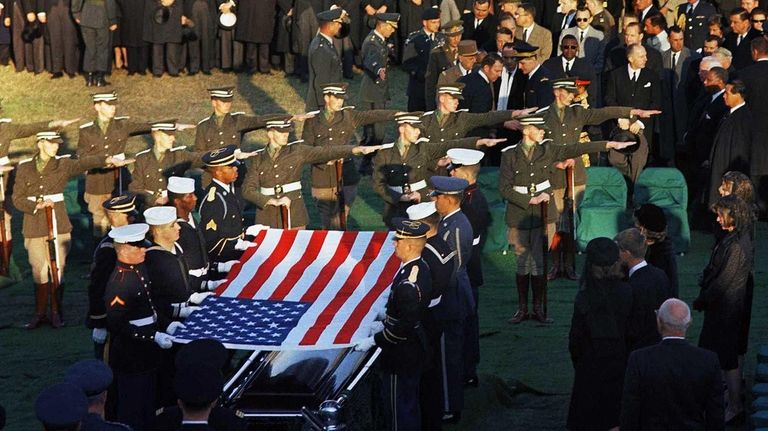
It would have been most popular to write about Jackie Kennedy, her reaction, and how strong and sad she must be to have lost her husband. However, she took up but a small part of the article. A small excerpt from the article shows this, “Everybody watched her while she walked. She is the mother of two fatherless children and she was walking in to the history of this country because she was showing everybody who felt old and helpless and without hope that she had this terrible strength that everybody needed so badly. Even though they had killed her husband and his blood ran onto her lap while he died, she could walk through the streets and to his grave and help us all while she walked” (Breslin 468). Within this article her importance is shown, along with her strength and her duty. Nevertheless, the main perspective from the story was that of Clifton Pollard. Through Breslin’s writing the audience can see that “the demand to contact an elite source in every case is weakening (Brennen, 2009), decreasing the elites’ power to control the news agenda (Bivens, 2008), but the basic societal structures remain unchanged in substance (Fuchs, 2009). As a result, citizens may have gained more importance in the news output, but they remain rather unimportant as actors even in the current context (Dimitrova and Stro¨mba¨ck, 2009)” (Keyser). Rather than being important, being strong, and having a duty to the people, Pollard was characterized as being nothing more important than your common man. He was shown as a simple worker that had to work an extra day, but from his perspective the audience, of which the majority would be common people like Pollard, can see the honor felt by the man towards being involved in the burial of the fallen President. From the article the audience is shown that “Clifton Pollard wasn’t at the funeral. He was over behind the hill, digging graves for $3.01 an hour in another section of the cemetery. He didn’t know who the graves were for. He was just digging them and then covering them with boards. ‘They’ll be used,’ he said. ‘We just don’t know when”’ (Breslin). Pollard was not allowed at the funeral as he was not important enough. That did not change the love and respect that Pollard felt for the dead President, rather it showed the situation that most common people were in. Their world could not stop to grieve for the fallen man despite their love and honor felt for John F Kennedy. They had to continue to do their jobs even if they were like Pollard and had no idea or control.
Perspective has been and shall always be a major influence on the understanding of ones writing. By forming the connection with the common people from writing from the point of view of a common man, Breslin was about to relate back to his target audience. By not writing from the view point of a person from the elite, Breslin was able to communicate the grief, love, and respect that common people like Clifton Pollard felt when mourning John F Kennedy. If he had written the story from the point of a person of the elite, then the affect would have felt almost forced because of the duty and strength that the elite are generally assumed to have.

Sources:
Breslin, Jimmy, and New York Herald Tribune. “Read Breslin's Signature 1963 Column about           
          JFK's Gravedigger.” Newsday, Newsday, 20 Mar. 2017, www.newsday.com/opinion/digging-  
          jfk-grave-was-his-honor-jimmy-breslin-1.6481560. 
De Keyser, Jeroen and Karin Raeymaeckers. "The Printed Rise of the Common Man." Journalism 
           Studies, vol. 13, no. 5/6, Oct. 2012, pp. 825-835. EBSCOhost,
           doi:10.1080/1461670X.2012.667993.
Kerrane, Kevin, and Ben Yagoda. The Art of Fact: a Historical Anthology of Literary Journalism.                  Simon and Schuster, 1998. It's an Honor By: Jimmy Breslin


Sunday, March 11, 2018

Post 3, Group A – Into the Matrix by Alan Donoho


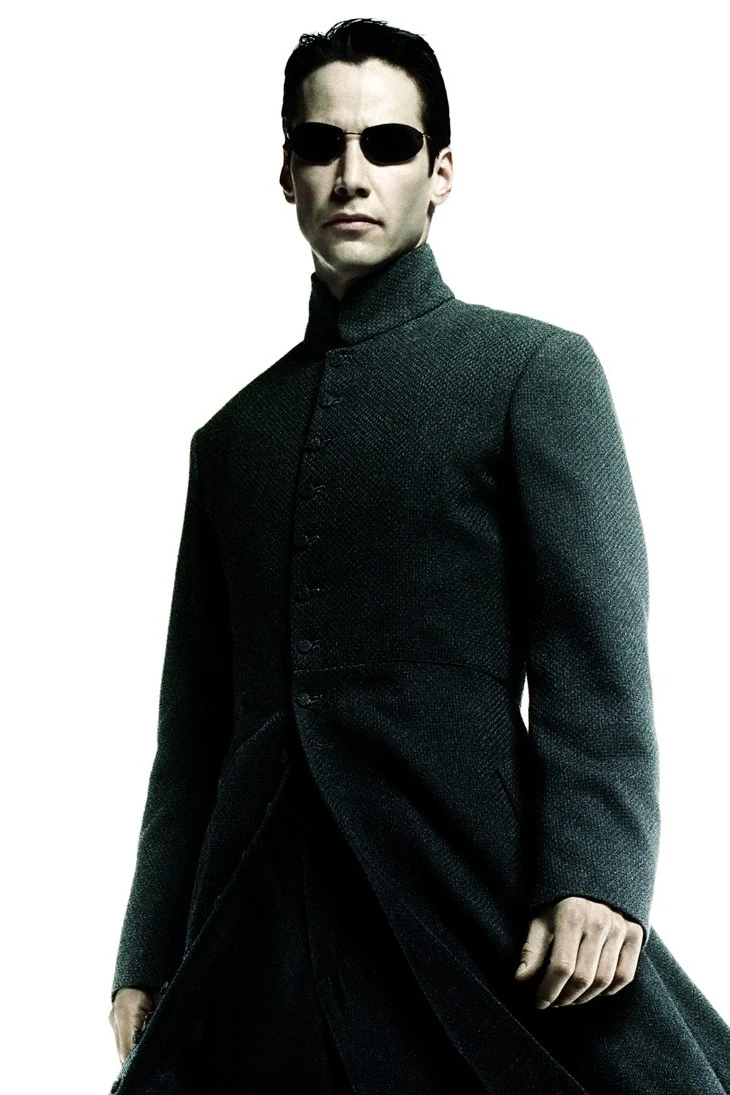
The Matrix has been, and I believe shall continue to be one of my favorite movies of all time. Not only is it entertaining to watch as it is filled with action and some comedy, but it also hits on several social issues or fears if you will. Some the most important ones, besides the obvious fear of technology, are the fear of one’s destiny or fate. It also hits on the fear of control, whether that fear is of too much or too little depends on the perspective of the viewer. What I want to focus on is the importance of fate and/ or destiny in the shaping of this film. One of the main characters, Neo, is supposed to be “The One”. “The One” is the supposed savior of the human race that will lead them in the taking down of the cyber-intelligence that is currently trying to dominate the human race. However, at first Neo does not believe in his destiny. In fact, it takes him actually dying to fulfill his destiny and become the one. According the article Between Fate and Destiny: Oedipus and Reactive Certainty in the Consulting Room by Suzi Naiburg, Ph.D., L.I.C.S.W., “fate happens in everyday life. We might call it chance or an emergent property of the field. Or we might think of it as the internal elaboration of trauma, repetitions in place of relationship” (Naiburg 446). Fate itself has been used as an explanation of life. People need to use it to find a reason for both bad and good occurrences. One might say the Neo was fated to save the human race because he is “The One”. So why at first did Neo deny his fate or destiny?
                Neo was born as Thomas A. Anderson. The system’s agents always refer to him as Mr. Anderson. These agents are similar to cyber-security. They are used to enforce the matrix’s rules and to stop humans from taking back the world. Neo had always felt that something was wrong, but he couldn’t quite figure out what it was. When Neo is freed from the matrix and told that he is “The One”, he undergoes extreme training to understand combat and how to free his mind. Then he is taken to the Oracle, “who has the power of foresight within the simulated world”. In summary of what she said to Neo; he has the gift, but he is waiting for someone and in his current life he is not “The One”. This is where we can talk about the fear of destiny or fate. Neo is faced with the fact the humanity is relying on him to save them and with the fact that the Oracle tells him that he is not actually “The One”. How can he fulfill the expectations of everyone around him while not being the one? Fear takes ahold of him and after Morpheus, the captain of the ship Neo is on and one the leaders of the resistance, is captured by the agents, Neo confesses that he is not actually “The One”.  This is because he has not accepted his destiny yet. According the article Between Fate and Destiny: Oedipus and Reactive Certainty in the Consulting Room by Suzi Naiburg, Ph.D., L.I.C.S.W., “Destiny is harder to come by than fate, because it involves the soul’s work – accepting all that we are and acknowledging all we have experienced, however shameful; creating a coherent  narrative in spite of trauma; making meaning in the face of ambiguity and uncertainty; developing tragic consciousness” (Naiburg 447). As I mentioned earlier, Neo had to die to fulfill his destiny. He is then reborn as “The One”. From there he moved on to fight the domination of the cyber-intelligence. 


"I know you're out there. I can feel you now. I know that you're afraid. You're afraid of us, you're afraid of change. I don't know the future. I didn't come here to tell you how this is going to end, I came here to tell how it's going to begin. I'm going to hang up this phone and then I'm going to show these people what you don't want them to see. I'm going to show them a world without you. A world without rules and controls, without borders or boundaries; a world where anything is possible. Where we go from there is a choice I leave to you." (Neo's phone call to the machines at the end of the movie)

             Back to the topic at hand, why do people fear fate or run away from their destiny? From my personal perspective, one’s fate is not decided at birth and is put together through our own choices. Or in other words I believe in free will. However, I think that in cinema it is a common theme for the main character to try to avoid their destiny, but no matter how hard they try is becomes a reality. This goes as far back as the Greek tragedy Oedipus, where the King’s son is destined to fall in love with his mother and kill his father. His father does all that he can to prevent it, but in the end his destiny comes true. This brings to mind many more questions and as philosophy so commonly seems to do, leaves the reader with more questions than answers. But again, why do people want to avoid it? I think the answer is simple and complicated. Simply, people avoid destiny because they fear the unknown and would rather seek sanctum in facts. The more complicated answer is that this unknown that people are so afraid of is life and it will be filled with good times and bad times. The reoccurring question is philosophy is what is the purpose of my life? Should one spend their life trying to find their destiny, trying to run away from it, or simply accept it when it comes whether they know it or not? Questions that lead to more questions.
Neo’s fear of his destiny is portrayed is his lack of understanding the Oracles words. He cannot come to understand his destiny until the one his is waiting for comes to understand hers. The one he is waiting for is Trinity. She was told by the Oracle that she would fall in love with “The One”. It was not until she finally admitted her love that Neo was able to realize his destiny. Until this happened Neo ran away from the facts and instead tried to be a hero. This lead to his death and finally to his rebirth. Why is this sense of purpose that we call destiny so feared? I believe the answer is simple. We fear not having control over our own lives.         

Resubmissios Essay

Throughout this essay I will be discussing the skills that I need to work on with it being personal skills and skills that pert...