The Matrix has been, and I believe shall continue to be
one of my favorite movies of all time. Not only is it entertaining to watch as
it is filled with action and some comedy, but it also hits on several social
issues or fears if you will. Some the most important ones, besides the obvious
fear of technology, are the fear of one’s destiny or fate. It also hits on the
fear of control, whether that fear is of too much or too little depends on the perspective
of the viewer. What I want to focus on is the importance of fate and/ or destiny
in the shaping of this film. One of the main characters, Neo, is supposed to be
“The One”. “The One” is the supposed savior of the human race that will lead
them in the taking down of the cyber-intelligence that is currently trying to
dominate the human race. However, at first Neo does not believe in his destiny.
In fact, it takes him actually dying to fulfill his destiny and become the one.
According the article Between Fate and Destiny: Oedipus and Reactive Certainty in the Consulting Room by Suzi
Naiburg, Ph.D., L.I.C.S.W., “fate happens in everyday life. We might call it
chance or an emergent property of the field. Or we might think of it as the internal
elaboration of trauma, repetitions in place of relationship” (Naiburg 446).
Fate itself has been used as an explanation of life. People need to use it to
find a reason for both bad and good occurrences. One might say the Neo was
fated to save the human race because he is “The One”. So why at first did Neo
deny his fate or destiny?
Neo was born as
Thomas A. Anderson. The system’s agents always refer to him as Mr. Anderson. These
agents are similar to cyber-security. They are used to enforce the matrix’s
rules and to stop humans from taking back the world. Neo had always felt that
something was wrong, but he couldn’t quite figure out what it was. When Neo is
freed from the matrix and told that he is “The One”, he undergoes extreme training
to understand combat and how to free his mind. Then he is taken to the Oracle, “who
has the power of foresight within the simulated world”. In summary of what she
said to Neo; he has the gift, but he is waiting for someone and in his current
life he is not “The One”. This is where we can talk about the fear of destiny
or fate. Neo is faced with the fact the humanity is relying on him to save them
and with the fact that the Oracle tells him that he is not actually “The One”.
How can he fulfill the expectations of everyone around him while not being the
one? Fear takes ahold of him and after Morpheus, the captain of the ship Neo is
on and one the leaders of the resistance, is captured by the agents, Neo confesses
that he is not actually “The One”. This
is because he has not accepted his destiny yet. According the article Between Fate and Destiny: Oedipus and Reactive Certainty in the Consulting Room by Suzi Naiburg, Ph.D., L.I.C.S.W., “Destiny
is harder to come by than fate, because it involves the soul’s work – accepting
all that we are and acknowledging all we have experienced, however shameful;
creating a coherent narrative in spite
of trauma; making meaning in the face of ambiguity and uncertainty; developing
tragic consciousness” (Naiburg 447). As I mentioned earlier, Neo had to die to
fulfill his destiny. He is then reborn as “The One”. From there he moved on to
fight the domination of the cyber-intelligence.
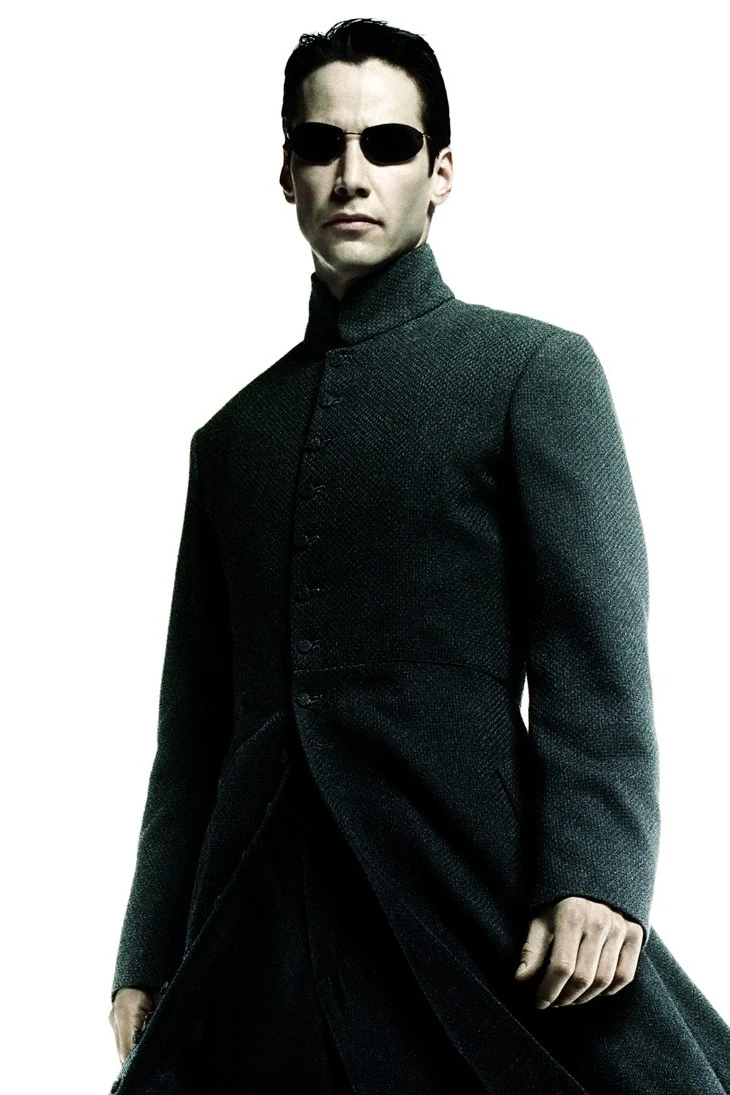 "I know you're out there. I can feel you now. I know that you're
afraid. You're afraid of us, you're afraid of change. I don't know the future.
I didn't come here to tell you how this is going to end, I came here to tell
how it's going to begin. I'm going to hang up this phone and then I'm going to
show these people what you don't want them to see. I'm going to show them a
world without you. A world without rules and controls, without borders or
boundaries; a world where anything is possible. Where we go from there is a
choice I leave to you." (Neo's phone call to the machines at the end of the movie)
"I know you're out there. I can feel you now. I know that you're
afraid. You're afraid of us, you're afraid of change. I don't know the future.
I didn't come here to tell you how this is going to end, I came here to tell
how it's going to begin. I'm going to hang up this phone and then I'm going to
show these people what you don't want them to see. I'm going to show them a
world without you. A world without rules and controls, without borders or
boundaries; a world where anything is possible. Where we go from there is a
choice I leave to you." (Neo's phone call to the machines at the end of the movie)
Back to the topic at hand, why do people fear fate or run
away from their destiny? From my personal perspective, one’s fate is not
decided at birth and is put together through our own choices. Or in other words
I believe in free will. However, I think that in cinema it is a common theme
for the main character to try to avoid their destiny, but no matter how hard
they try is becomes a reality. This goes as far back as the Greek tragedy Oedipus,
where the King’s son is destined to fall in love with his mother and kill his
father. His father does all that he can to prevent it, but in the end his
destiny comes true. This brings to mind many more questions and as philosophy
so commonly seems to do, leaves the reader with more questions than answers.
But again, why do people want to avoid it? I think the answer is simple and
complicated. Simply, people avoid destiny because they fear the unknown and
would rather seek sanctum in facts. The more complicated answer is that this
unknown that people are so afraid of is life and it will be filled with good
times and bad times. The reoccurring question is philosophy is what is the
purpose of my life? Should one spend their life trying to find their destiny, trying
to run away from it, or simply accept it when it comes whether they know it or
not? Questions that lead to more questions.
Neo’s fear of his destiny is portrayed is his lack of understanding
the Oracles words. He cannot come to understand his destiny until the one his
is waiting for comes to understand hers. The one he is waiting for is Trinity.
She was told by the Oracle that she would fall in love with “The One”. It was
not until she finally admitted her love that Neo was able to realize his
destiny. Until this happened Neo ran away from the facts and instead tried to
be a hero. This lead to his death and finally to his rebirth. Why is this sense
of purpose that we call destiny so feared? I believe the answer is simple. We
fear not having control over our own lives.


