Lolita is about a man, in his 40’s, named Humbert and 12 year old Delores
(or Lo) and their intimate affair with each other. Just by the first sentence
it is quite easy to judge that this book is immediately wrong and sick, and I
too was once quick to judge but it is so much more than that, Lolita opens a pathway to question love,
life, and fate.
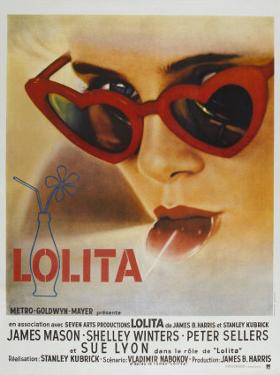
In the beginning
of the book/movie a memoir is sent to John Ray titled “Lolita”, this came from
Humbert who had recently died in prison. The memoir explains all of Humbert’s
losses, experiences and regrets. He explains that ever since his childhood love
died, Annabel, little girls infatuated him. One day he is looking for a place
to stay when he stumbles upon the house of Charlotte (Lo’s mom) and Delores. He
quickly is possessed by his need for being around Lo that he marries Charlotte
just to be near Lo. One day Charlotte finds out the intention behind Humbert
and storms off angry and gets run over by a car; just like that Humbert and Lo
are finally together. Humbert takes Lo far away and they become very intimate
(sexually and emotionally); their relationship develops as what you could say
is a dominant and submissive. In this case Lo became the dominant because she
realized the powers she had over Humbert, she knew that whenever she needed
something Humbert would give in. After a while passes, Lo runaway with another
older gentlemen named Quilty who insists she does child pornography but Lo
refuses. Many years later after Humbert searched for Lo years and years he
receives a letter from her saying she is pregnant and need money. Humbert drops
everything and goes to find her. He sees Lo (now about 17) pregnant and now
married, he begs her to come back with him but she says no. Humbert gives her
all his money and goes to find Quilty and kills him. Humbert ends up in jail
and dies there from heart failure, while Lo dies during childbirth; that is how
the book ends, no happy ending, no recovery, no salvation, just death and harsh
real life.
Like I had
previously said if anyone else had read/hear the summary with no context it could be
perceived as being just sick and in a way it is, but in another way it is
beautiful (not the act of pedophilia) but the meaning behind the way Lo’s life
developed. As a firm believer that everything happens for a reason, I never
truly understood what that reason was for everything that happened to Lo. When
I first read the book my mind was all over the place, I wanted to hate Humbert
yet I his persuasive writing made me think of him as not a pedophile but as a
regular love driven guy. In the film/book, Lo is perceived as being “unvirginal
long before Humbert came upon the scene, so knowing, so jaded, so unchildlike”
(Vickers). This is not to say that Humbert had every right to do what he did
because he didn’t, but to him every little thing Lo did just made him weaker
and relentless to have her. For a teenage child, Lo lived an unexpected life,
from being orphaned, kidnapped, raped, and sexualized, to just end up dead
sounds horrid but unfortunately that is every day life for some. I think the
meaning behind Lolita is to show the
normalness of two people living their lives (in a way that we may not agree
with) just to end up the same like all us, dead. It was an emotional, confusing
rollercoaster but and the end of the day you realize that “the desperate truth
of Lolita’s story is not the rape of a twelve-year-old by a dirty old man, but
the confiscation of one individual’s life by another. Although we cannot know
what Lolita’s life might have been like had Humbert not hijacked it, “the
novel, the finished work, is hopeful, beautiful even, a defense not just of
beauty but of life, ordinary everyday life, all the normal pleasures that
Lolita, was deprived of” (Vickers). And much like Lo felt conflicted with the
way her life took a turn, I felt conflicted with her life and how it compared to mine.
*Side Note: If you watch ever watch the movie or (especially) read the book I thought it was interesting how Nabokov made Humbert so literate and beautifully spoken. His writing was poetic yet the acts he wrote about were not.
References:
Vickers, Graham. Chasing Lolita : How Popular
Culture Corrupted Nabokov's Little Girl All Over Again, Chicago Review Press,
2008. ProQuest Ebook Central,


