Showing posts with label Post 3. Show all posts

Monday, April 2, 2018

Group A, Post 4: Teaching Success by Aly Hernandez


Robin Williams is one of the most recognized names in cinema due to his involvement in Jumanji, Night at the Museum, this list goes on and on.  One of his films, Dead Poets Society filmed in 1989, has touched many people of different backgrounds. The film takes place at a prestigious private school for young boys where the new unconventional teacher Mr. Keating (Robin Williams) has begun to teach English for the academy. Mr. Keating is a unique type of teacher who chooses to stray from the traditional education path that many of his colleagues have taken.
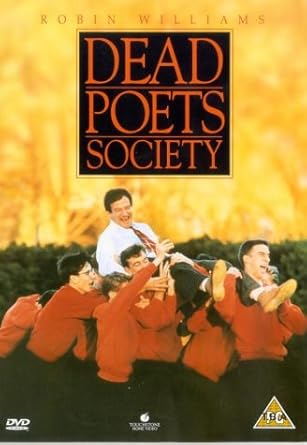
Image result for the dead poets society

Traditional education as portrayed in the film is teaching students through strict discipline and compliance to the system focused on training students to absorb the material they are being taught. In a way the traditional teaching way is meant to teach students to not question authority and instead accept authority, the rules, and to conform with the way things are and have been. The alternative and unconventional teaching methods were opposite of the traditional. The students, as Mr. Keating portrayed, were free to think for themselves, question authority, and to be individuals.

One of the most memorable aspects of the film itself was the unconventional teaching methods that collided with the traditional teaching methods accepted by the faculty at the school. Both methods attempted to yield different outcomes for what “success” means to various students. One of the questions the film poses for the audience is the following: Does conformity equal success?

Conformity in the film is an important area of interest. In an early scene, the students are seen reciting the school mantra “Tradition, Honor, Discipline, and Excellence”. In a way, the students are portrayed as robots, monochromatic by the same color of their uniforms, and extremely bored by the sound of their dull voices.  Their entire education in this school, by the cinematic portrayal of this scene, is meant to be the same because in this “training” they all share the same concept of what success is, which the teachers and parents identify as being an academically strong student, getting into an Ivy League school, and obtain a great job.

Defying conformity is also prominent, in an early scene where Mr. Keating introduces himself on the first day, the students learn to view life through a different angle by standing on their desks. He then has one of them read from the first page of their poetry page which attempts to mathematically graph good poetry from bad poetry. To express his disdain to this concept, Mr. Keating has the students tear out that page and many more. The students hesitate since the idea of ripping pages out of a textbook is almost “taboo”, but eventually the students begin to enjoy it.  This scene also introduces the idea of career aspiration such as Doctors or Lawyers and introduces the students to the importance of other aspirations such as artistry, poetry, and passion. In its own way, society labels medical and legal careers as superior to artistry, Mr. Keating did not attempt to destroy that idea rather he intended to show them that there is more to the world and themselves than being doctors or lawyers.

Dead Poets Society Movie: Scene #2
(A picture of a scene where Mr. Keating teaches the students to look at life and learn through a different perspective in order to defy the ordinary)

The film also introduces the good side of conformity by introducing the father of Neil Perry. Neil wanted to be an actor, but his father would not allow it and wanted his son to pursue a “real” career. Conformity in this sense was needed as his family was not wealthy and his father only wanted his son to have the financially stable future that he did not. This kind of conformity was honorable and necessary for the family.

Mr. Keating was an anomaly at the school who challenged his students to think beyond what is expected of them and to find their own expectations of themselves. Conformity, in my opinion, does not equal success. Traditional teaching methods do not work for all students and should not be modeled to make everyone alike. In an essay titled “Reclaiming the Social:Pedagogy, Resistance, and Politics in Celluloid Culture”, Henry Giroux argues that the culture of the school does not expect the students to know how to think on their own but rather the parents and faculty there create a culture where the students are expected to be members of the elite. In other words, they are expected to be powerful, privileged, and wealthy leaders of tomorrow. Mr. Keating, disrupts that culture by introducing free thought to the students. Being the minority amidst an entire body of faculty and parents who disagree with his unorthodox teaching practices, Mr. Keating ultimately does not last long in the school.

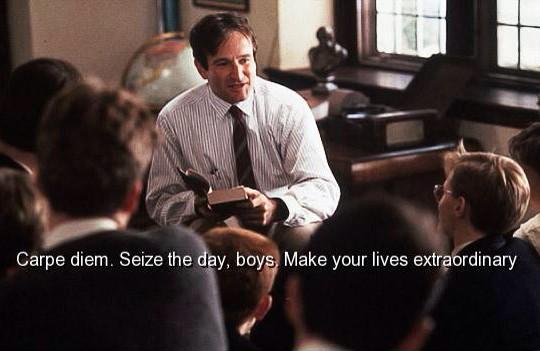
The phrase Carpe Diem or Seize the Day, frequently used by Mr. Keating is unorthodox and goes against the conformist views of the school and parents. Carpe Diem refers to the spontaneous, and the students are encouraged to worry less on the future and live in the present thus stating that success is only limited to what you allow it to be. Giroux also states that the older generation and the younger generation have different views on what success truly means when interpreted by both. This is true because the older faculty are only focused on teaching their way to the students, any other way is unacceptable. Because of this, the students never considered the idea that there may be different ways to do something, to be successful, or to learn. 
Related image

Does conformity equal success? The answer is no but yes. There are many ways in which one can view conformity as a terrible ideology yet in the case of Neil Perry’s father, conformity was essential for him and his family to succeed. I think today in our day and age both traditional and alternative teaching practices are acceptable and can be understood. Both ways can lead to success.  No student is identical, and some are more similar than others. Essentially, success is subjective and teaching to bring out individuality is possible just as teaching conformity is possible as well.

Monday, March 19, 2018

Group B - Post 3: The Art of Creating Dissociation in a Sonic Landscape through Abstraction; Radiohead Kid-A Analysis- Kenneth Butcher

The five piece Alternative, Art rock, electronica band Radiohead hailing from Abingdon, Oxfordshire England have never been ones to shy away from addressing the gnawing existential ideas that float around in everyone heads from time to time on topics ranging from identity to sadness with their music. However instrumentally, for their first 3 albums they (for the most part) held true to a lot of the musical staples of their genre during that era, like *diatonic power chords and popular time cadences like 4/4. Save for a better understanding of chord layering and time signatures than many of their contemporaries. But there was one album in their discography I personal feel was their opus of sort in regards to fully relaying the abstract feeling of not feeling like you belong in your current environment; as well as signaled their foray into incorporating heavy electronica elements and more unconventional sounds/methods of song writing to their creative process. In this essay I will briefly go through the structural, instrumental elements of the opening song of the album entitled "Everything In It's Right Place" and look at how said elements are employed to create a feeling of dissociation in and through their music.


    The first track "Everything In It's Right Place" not only paints a fairly good picture of what the rest of album is going to be like; but also kind of puts the listener on edge by incorporating several musical elements that almost seem to contradict each other. A 10 beat phrase is subtlety carried by a light 808 drum machine that is sort of drowned in muted piano chords that bounce back and forth from landing on the 4th and 6th notes. As well as going from a C to a D major to an E flat, which all serves to create a sense of dissonance. The major C and D major chords create a sort of warm atmosphere as the phrase loops, which is constantly being under-cut by the colder E flat which permeates the warmth of the major chords with a sense of unease. Or (if you'll forgive the pun) a sense that everything isn't in the right place. This flip from *ionian and *phrygian inflections is also prevalent in the way the lead singer Thom Yorke sings the the opening line "Everything In It's Right Place", and in the way the his vocals are chopped and dispersed intermittently in the beginning of the song before he sings the line proper. This is where the contradiction and irony of this song lies; between the title of the song and the songs structure. The songs stakes it's claim in the idea that everything is in it's right place before presenting the listener with skewed, seemingly random vocals a chord structure that doesn't follow a typical major or minor scale progression. A piano line that occasionally decides to land on the down beat; all above a steady 808 pulsing through 10 beat phrase. The final example of the song employing composition elements to create a feeling of disassociation can be found in the lyrics themselves. Of which include, "Yesterday I woke up sucking a lemon" and "What was that you tried to say?" . These lyrics serve to paint a picture of natural situations but with the inclusion of an element that distorts it or makes it unconventional, i.e waking up with a lemon in your mouth. Or somebody asking someone else to repeat something, even though they didn't say anything.


I think this kind of light deconstruction of repetitive aspects of pop (which is usually associated with positive emotions) is used this way to great a sense of gnawing unease and sonically exemplify the feeling of emotional dissonance/ disassociation. This kind of structural dissonance reminds me a lot of abstract impressionist art work. As well as a specific quote from a book entitled "Nature of Abstract Art" by Meyer Schapiro (1937) that I had to read for my art history class last semester; which was, "In the 1880's there were several aspects of Impressionism which could be the starting points of new tendencies and goals of reaction. For classicist painters the weakness of Impressionism lay in its unclarity, its destruction of definite linear forms"-" If the Impressionists reduced things to the artist's sensations, their successors reduced them further to projections or constructions of his feelings and moods, or to "essences" grasped in a tense intuition." (pg 4) This specific part of the essay was arguing that the striped back more abstract and 'open to interpretation nature' of impressionism was a detriment to the medium of painting.
contrary to this I would argue that, in the same way that Radiohead's ability to convey dissonance with their musical arrangement does a lot in conveying a feeling that many can relate to, without outright saying it; I'd say that the same argument can be made for impressionist paintings, and the painters who made and continue to make them. So I believe there is ultimately a lot to be said about the positive aspects of abstraction's ability to convey dissonance in art.

*Ionian mode is a musical mode or, in modern usage, a diatonic scale also called the major scale.

*Phrygian is the mode represented by the natural diatonic scale E–E (containing a minor 2nd, 3rd, 6th, and 7th)

Phrygian dominant scale

A Phrygian dominant scale is produced by raising the third scale degree of the mode:
E Phrygian dominant
Mode:EFG♯ABCDE
Major:1♭2345♭6♭71
Minor:1♭2♯345671

Work Cited:

Schapiro, M. (1937). Nature of abstract art.
Ionian mode. (2018, February 28). Retrieved March 19, 2018, from https://en.wikipedia.org/wiki/Ionian_mode
Phrygian mode. (2018, March 14). Retrieved March 19, 2018, from https://en.wikipedia.org/wiki/Phrygian_mode

Saturday, March 17, 2018

Post 3, Group B - Interfamilial Relationships and Technology, by Jared Islas

The Veldt by Ray Bradbury tells the story of the Hadley family living in a futuristic world where technology and the home are deeply intertwined. Despite the story being written and published in the early 1950’s, the technology is neither outdated or beyond belief for today’s audience. What is really interesting about the story is the light it shines on the correlation between technology and interfamilial relationships. A negative affect is shown with both a husband-wife relationship and parent-child relationship, but this post will focus on the latter.

When George and Lydia (the parents) first enter into the nursery that their children (Peter and Wendy) continuously transform into the veldt, they are chased out by vicious lions. Lydia, being much more upset over the subject tells George that they need to keep their children out of the nursery so that they no longer go into the dangerous, and in her opinion, scary African veldt. George goes on to say, “You know how difficult Peter is about that. When I punished him a month ago by locking it for even a few hours — the way he lost his temper! And Wendy too. They live for the nursery.” The abnormal parent-child relationship between the Haldey’s is first made evident in the story during this quote. Not many parents would consider their children’s unhappiness due to a punishment, but in this instance, George does. 

Bradbury expands on the abnormal parent-child relationship in the next scene when he says “Wendy and Peter were at a special plastic fair across town. They had called home earlier to say they’d be late.” It is later revealed that after the two 10-year-old children arrive home via their helicopter, they have already eaten a dinner of strawberry ice-cream and hot dogs. Again, this expands on the idea that the children are running the family in this future, not the parents.
The interesting thing about this story is the similarities it shares to current parent-child relationships with the addition of new technologies in our lives. A quote in the Journal of Family Relations says that, “parent’s roles have diminished because children… are more adept at using communicative technologies than adults… As a result, parents may not be aware of the websites their children are visiting… Parents have to walk a line between trusting the blocking software and addressing the issue directly with their children.” This quote can easily be transformed into making sense in the context of The Veldt:

George and Lydia’s roles as parents have diminished because their children are content with living off of the various technologies in the home… As a result, their relationship with their children has become so insubstantial that they have no idea why their children keep imagining the veldt inside of the nursery, or why they treat them with such little respect… However, George and Lydia have to be careful because turning off the nursery completely and taking away the thing that their children love so dearly could have dire consequences.

Knowing what happens at the end of the story really puts the last part of the quote and matching transformation into context. George and Lydia tried to talk to their children directly throughout the middle of the story, but when nothing changed, they ultimately decided to lock the nursery, essentially using a “blocking software” to get their kids to stop returning to the veldt. Little did they know that kids, especially technologically savvy kids like Peter and Wendy, will always find away around a block, even if it involves arranging the murder of their own parents…


Works Cited
Hertlein, Katherine M. "Digital Dwelling: Technology in Couple and Family Relationships." Family Relations, vol. 61, no. 3, 2012, pp. 374-387.

Tuesday, March 13, 2018

Post 3 Group A: Race as a Dollar Sign by Aly Hernandez


The Bronx Slave Market by Marvel Cooke introduced the topic of racial controversial discourse prevalent before the 1900s, during the 1950s, and significantly present in our day and age. Many who fail to understand the intricate weaving's of American racism often ask themselves “Why is racism even a conversation anymore? With all the programs such as affirmative action in place to help minorities assimilate, why are we still talking about racism?” The question I pose and attempt to answer in this post is this: “Why is The Bronx Slave Market just as important now as it was in the 1950s”?

Here we go…

First, I would like to bring up a book I read a few years ago, The Other Wes Moore by Wes Moore. This book attempts to address a serious problem in African-American youths - the disproportionately high amount of poverty and crime afflicting black communities. How could two people by the same name, from similar backgrounds and neighborhoods, born within a few years from each other grow to have two completely different lives from one another. One is a Rhodes Scholar the other is in prison for murder other crimes. In one of my favorite quotes throughout the book, Wes Moore writes, “This book is meant to show how, for those of us who live in the most precarious places in this country, our destinies can be determined by a single stumble down the wrong path, or a tentative step down the right one.” In this, Moore seeks to provide his readers with an essential life lesson of precaution and awareness. By reading his book, experiencing his life and the other Wes Moore’s life, the reader is already taking measures into taking a step down the right path, but that is easier said than done. Although Moore does provide the readers with an abundance of resources to help in the end of his book, the choice to do better is often a difficult one than imagined. It is difficult because while we all hate to admit it, money is the fruit to our success in this country. You either have it or you don’t and if you don’t you have to find a way to get it. The American dream is drilled into us and our ideas of success. The means to success are too often difficult for some to obtain. Crime is often committed in the absence of money and providing for the necessities in life often proves to be a challenge for a disproportionate number of minorities.

The same ailments that plague the lives of many impoverished African-American youth affected the women of the “Paper Bag Brigade”. They too worked for a lower wage than the minimum wage, often working below their means; after all some money is better than no money. When jobs ran low, what then? One of the fears that Cooke had for the women of the “Paper Bag Brigade” was not that they would work for less than the value of their performance and worth, but that they would succumb to prostitution. Is this not a similar situation in which many minorities such as The Other Wes Moore find themselves? Again, this is simple survival trying to make it paycheck by paycheck. The Bronx Slave market still exits re-branded under a different face known as the mass incarcerations of African-Americans. Bruce Western and Christopher Wildeman write that “Age, race, and educational disparities concentrate imprisonment among the disadvantaged. Figure 3 shows trends in incarceration rates for young black and white men with different levels of schooling”.  That graph demonstrates the contrast between white and black incarcerations based on levels of education. It is important because while we are having the highest incarcerations, a large portion of our incarcerations are blacks. This is the new American slave market where prisons are literally getting funded by the number of inmates they can get. The motto goes that the darker the inmate is the larger the cash flow and such as system is revolting and sickening.

They take their labor, pay them next to nothing, take their liberty, and their hope for a brighter future. When it gets tough it becomes easier for the children of minorities, the children of immigrants, and the children of poverty, to enlist the help and benefits of the criminalized path to success.
So then…Why is racism still important?

Because it makes white people uncomfortable. We live in a system that steadily gives resources to white people at the complete expense of African Americans. The system that takes their labor, their thoughts, their culture, their rights, their freedom, and their music to re-brand to give to white communities. Almost identical to the Bronx Slave Market where the women were stripped of their labor, their freedom, their thoughts, and their rights. You cannot move on from the past until the same group that is being oppressed is given the necessary resources to assimilate and prosper without fear of any kind of reprisal from others who feel threatened. It is important because a large group of people are being incarcerated and used for money and it is not okay.


Monday, March 12, 2018

Group A, Post 3, Carter Messner - 2001: A Space Odyssey

2001: A Space Odyssey is a story I first read in high school, but I was left wondering many things about some of the objects in the story because the story didn't go into enough detail for me on the origins of the Monolith and how HAL was able to "murder" the crew members. So like any sensible teenager I decided to watch the movie to see if I could come to any conclusion with visual help. What I found out while researching is that many people believe HAL malfunctioned while I believe that HAL was deliberately doing things to get rid of the humans, but I will start where the movie begins with the Monolith.

The Monolith appears in the movie only a couple of times but the recurrences of it are at significant times in human development, first it appears when the first man like creatures use the first tool (bone used as a club), the second time is on the moon showing that man has now left the boundaries of their own planet, and the third is before David Bowman who was part of the two man crew on the same ship as HAL, is turned into the Star-Child, showing the change from a living creature to an extra dimensional being. Now, what I believe the reason for this Monolith being, is to be a watcher over the evolution of mankind and most likely other life in the universe, to follow and track the progress until it eventually becomes a being of higher dimensions. When I read the book, I thought of the Monolith gave the knowledge of using tools to man to start the evolutionary process. But, the movie never hinted to this idea, the Monolith has just been tracking the life on the planet waiting for a form to evolve to the ability of tool making. I also found it interesting that in the story it said that the Monolith looked to has been deliberately buried in the moon, showing that it knew that humans were going to go there someday.  

That story line is sort of a background story in the main plot of the movie. The crew members on the ship Discovery One, Dr. David Bowman and Dr. Frank Poole are on a mission to Jupiter after the discovery of the Monolith on the moon, and they have an AI computer, HAL 9000, helping them on the trip there. The computer eventually goes crazy and ends up trying the kill the crew members, in an article I found on the HAL malfunctions, it was said that "the crew gradually figures out the computer is malfunctioning and faced with the threat of disconnection and hence loss of control; HAL 9000 reasons that with the crew dead it can continue to operate while concealing its malfunction from mission support staff on Earth and sets about killing them." (Hinton), but again I interpreted it differently. Computers don’t typically malfunction, now I know that this is science fiction and basically anything can happen, but I don't believe the computer was having a psychotic breakdown. The computers purpose was the get the crew to Jupiter, but the computer had one problem that was keeping it from doing its' job, the humans who were trying to shut HAL down. The computer figures out that it can finish its job only if it can stop the humans from shutting it off, so the only logical answer is murder. This is my opinion, but I feel like an entertaining spin on the story to think about if you are going to check this movie out.  
This is another example of the book being better than the movie, but only because of how slow moving the story line in the movie is. The graphics in this movie are still pretty good since the movie is now 50 years old, it is a classic for any science fiction movie lovers.  

Hinton, Russell. "Movies in mind – 2001: A Space Odyssey", Australian & New Zealand Journal of Psychiatry, 01/2018, Volume 52, Issue 1. January 10, 2018. 

Group A, Post 3. Behind the Blinds: Indirect Love Triangles and Fear of Intimacy-Alex Giangreco

   Some of the most fearful endeavors we undertake in this life are romantic in nature. Fear permeates every stage of intimacy in our romantic relationships. Fears of rejection, vulnerability, and judgement are common in the infancy of any romantic involvement or pursuit. As relationships mature and progress these fears do not subside. Individual fears of mistrust, manipulation, communication, and infidelity impact many relationships in their later stages. The prospect of ending a relationship is also rather terrifying in many instances, as contemplating what comes next and how to move on can add another layer of fear.
   These intimate relationships are inherently frightening for many, due to their fears of repeating past experiences or trauma. A couple can thrive or break due to their responses to these fears. These fears are manifested in our actions, desires, preferences, and behaviors. Our involvement with these factors in a romantic context forms a triangulation. A relationship between the variables and the two parties forms an emotional geometry that can be harmful or beneficial. This triangulation can be healthy and encourage developement, enabling couples to communicate and resolve conflict. Or this triangulation can be a detriment, preventing a couple from properly connecting or engaging.
   I will explore the indirect romantic triangulation existing beneath the surface of the direct sexual triangulation depicted in the Clear Plastic Masks song "Behind the Blinds," released in 2016. I will utilize this analysis to display how triangulation can occur in an intimate relationship. I will also argue that each member of the couple can exhibit their own form of triangulation within the broader context of the relationship's triangulation.

   Defining a love triangle is tricky, so a broad definition serves us best here. Love triangulation is simply our relations to our internal and external worlds, and how they factor into the health and balance of our intimate relations. Triangulation can involve relationships to friends, family, or co-workers. It can also involve hobbies, parental duty, professional obligations, and even ideology. This triangulation can even occur internally due to self-criticizing or self-adulation.
   We tend to consider extramarital or romantic affairs when confronting this topic. This involvement of a third romantic party is referred to as direct triangulation. What is much less identifiable is how our interactions with our fears of intimacy can form a love triangle. This is known as indirect triangulation. How our emotions, desires, behaviors, and needs are approached and addressed in a romantic context, and how that complexity impacts the couple's interactions.
   In the opening verse of the song we can easily identify that some sort of triangulation is at play in this relationship. We cannot yet identify whether it is direct or indirect, but one party is obviously allowing an external force to impact their involvement in the relationship:
   "Well, the sun finds me hiding behind the blinds. Rolls me over like the change in tide. Though your memory will eclipse, eclipse the day, all that's left is your lipstick on the filter tip in the ashtray."
   So, the woman in his life has left, and we can see that he feels unfulfilled due to her absence. The triangulation for the other party is evident here, but continue through the song and you will find that he is not without his own distractions to addressing intimate fears.
   Before we can delve into his triangulation, we must further classify forms of triangulation. We have discussed direct and indirect, but indirect triangulation can be further categorized still. Here we turn to Dr. Alan Michael Karbelnig's piece The Geometry of Intimacy: Love Triangles and Couples Therapy. Dr. Karbelnig classifies two types of indirect triangles as defensive and discordant. His clearest definition of a defensive love triangle comes on page 74, "Defensive love triangles refer to excessive involvement with triangles in the serving of defending against dialogue between intimate partners."
   Later, on page 76 Dr. Karbelnig elaborates on discordant triangles, "Couples who are too physiologically immature to engage in a mature form of romance, as manifest in their tendency to lack sufficient individuality to see the other party as a whole person, and those who are too psychologically injured to allow anyone to grow close to them."
   With those definitions in mind, we move on to the second verse. Here we can see signs of defensive triangulation on behalf of the love interest, but also discordant triangulation on behalf of the artist.
   "All the reasons you say you can't stay, make me wonder why I bother anyway. Well, I know it's not love, 'cause you do harder drugs. Maybe it's empty lust."
    We can see that she has externalities pulling her away, all the reasons she can't stay. We also discover her drug use. This is layered. But, it can be surmised that these external forces serve as a mechanism to avoid intimate connection with our singer. A way to avoid confronting her intimate fears in the context of their relationship, and addressing his fears. She is engaging in defensive triangulation through her drug use and other involvements romantically, in turn avoiding her emotional needs, as well.
   As mentioned before, our narrator also has his faults. He is identifiably discordant. He is wrapped up in his internal conflictions and fears regarding intimacy. Fears typically rooted in past traumatic and romantic experience. This internalization of emotions, his refusal to confront her behavior and his needs, and his fear based reactions prevent him from establishing intimate needs. He is too damaged to connect, and his relation to his emotional damage is a discordant triangle.
   At the end of the song we get one last picture of this couple's situation. We get to see her defensive triangulation with various external forces, as well as his inability to confront the direct sexual triangle as a result of his discordant triangulation with internal factors.
   "What are you thinking when you leave? So afraid of being seen. I'd say leave him, and we'll make things right. But I know where you go at night. Oh, I'm just one of many more. It's not last night anymore."
   There is obviously the direct triangulation due to the woman's romantic interests. This closing piece, however, is much more telling of our narrator. He is internalizing his displeasure of knowing about the other man. He is internalizing his questions about her thoughts, motives, and emotions. He is struggling with an internal dilemma of confidence and worthiness. This is very discordant behavior, as he simply seems to be too scarred or scared to fight for her to stay.
   Triangulation can be healthy, as it permits individuality and promotes emotional growth. It can also be extremely complex, manifesting not only in a broader manner in the relationship as a whole, but seperately for the romantically involved parties.
   The artist paints his companion as engaging in a defensive triangulation, unwilling to commit or connect. He is painted as discordant, unable to effectively communicate his needs and desires, or even break off his involvement. The complex intimate relationship depicted by Clear Plastic Masks not only displays the differences between direct and indirect triangulation, but offer a beautiful display of the differences between discordant and defensive behaviors in love triangles. It shows very well how this romantic geometry can be layered for both parties, serving as a lesson in the importance of communication and understanding in our love lives.

Resubmissios Essay

Throughout this essay I will be discussing the skills that I need to work on with it being personal skills and skills that pert...