I'm really just here to put something up so I can resubmit it later. You all can keep scrolling. Nothing to see here.
Been to 4 different orthopedists and none of them know what's wrong with my knee, but they all really like to write prescriptions.
So, that said, any post I would have tried would have been terribly incoherent due to the medication I'm on.
So, I'll just resubmit this later, when I'm not out of mind in pain.
Wednesday, April 4, 2018

Tuesday, April 3, 2018
Group A Post 4: Magical Realism and Gabriel Garcia Marquez by Bailey West
Gabriel Garcia Marquez is well known for incorporating magical realism into his work. Magical realism is present in stories that are anchored in reality but have elements of fantasy. According to Caroline Lee Schwenz in her article "Magical Realism", it "differs from pure fantasy primarily because it is set in a normal, modern world with authentic descriptions of humans and society". Marquez is known for using this in his stories; "A Very Old Man with Enormous Wings" is no exception. In this short story, Marquez uses magical realism to incorporate a supernatural creature into reality. How they treat this creature says a lot about the "othering" effect and how we treat people that are different from us. We tend to exaggerate differences between each other as an excuse to ostracize the new person.
In many ways this story makes a statement about how we treat people that are new or different to us. Marquez uses magical realism to do this by introducing a supernatural creature. This creature is unique because it's mostly man. Although he startles Pelayo and Elisenda at first, they "very soon overcame their surprise and in the end found him familiar". This shows that we are able to recognize humanity in each other. However, the old man is stuck in a constant middleground. He is not a person, but the priest doubts that he's an angel either. Instead of focusing on the human parts they did see of the old man, they couldn't get over his huge wings. People gathered around him and threw food at him "as if he weren't a supernatural creature but a circus animal". According to the story, "even the most merciful threw stones at him". Even if we are able to see some humanity in people that are different from us, it is often derailed by the differences.

A closer look at the man exposes even more of his humanity. When Pelayo got close to the man "he noticed that seen up close he was much too human". This quote alone says a lot about humanity. Once we see each other up close- once we really take the time to look and relate to each other- we can see the similarities. It becomes much harder to ignore. This begins to have an impact on the family as the crowd dwindles and the old man remains in the chicken coop until it collapses. They keep him at a distance but they allow him to stay. This leaves us with some hope about humanity; maybe we can notice more similarities than differences.
We often focus on the differences and exaggerate them; we marvel at or make fun of these differences. We make a show of it. Marquez shows this by inventing a supernatural creature to bring out these traits of humanity and expose how we treat something that is so similar to us but also different. However, the ending implies tentative hope. In the end maybe the similarities can outweigh the differences. Maybe we can learn to accept each other and live in peace.
Scholarly Article: https://scholarblogs.emory.edu/postcolonialstudies/2014/06/21/magical-realism/
In many ways this story makes a statement about how we treat people that are new or different to us. Marquez uses magical realism to do this by introducing a supernatural creature. This creature is unique because it's mostly man. Although he startles Pelayo and Elisenda at first, they "very soon overcame their surprise and in the end found him familiar". This shows that we are able to recognize humanity in each other. However, the old man is stuck in a constant middleground. He is not a person, but the priest doubts that he's an angel either. Instead of focusing on the human parts they did see of the old man, they couldn't get over his huge wings. People gathered around him and threw food at him "as if he weren't a supernatural creature but a circus animal". According to the story, "even the most merciful threw stones at him". Even if we are able to see some humanity in people that are different from us, it is often derailed by the differences.
A closer look at the man exposes even more of his humanity. When Pelayo got close to the man "he noticed that seen up close he was much too human". This quote alone says a lot about humanity. Once we see each other up close- once we really take the time to look and relate to each other- we can see the similarities. It becomes much harder to ignore. This begins to have an impact on the family as the crowd dwindles and the old man remains in the chicken coop until it collapses. They keep him at a distance but they allow him to stay. This leaves us with some hope about humanity; maybe we can notice more similarities than differences.
We often focus on the differences and exaggerate them; we marvel at or make fun of these differences. We make a show of it. Marquez shows this by inventing a supernatural creature to bring out these traits of humanity and expose how we treat something that is so similar to us but also different. However, the ending implies tentative hope. In the end maybe the similarities can outweigh the differences. Maybe we can learn to accept each other and live in peace.
Scholarly Article: https://scholarblogs.emory.edu/postcolonialstudies/2014/06/21/magical-realism/
Group A, Post 4, Omelas and Wage Inequality by Carter Messner
For my final post, I'm going to be writing about the text "The Ones Who Walk Away from Omelas" by Ursula K. Le Guin. This story I believe had the most impact on me, and I feel like the message of the story should be used as a societal norm for how we live our lives. This story is about a society that is perfect, and just like most stories about utopias, there is a dark secret that is revealed. The secret being that a young child is being tormented, and the only way for the society to stay perfect, is if the child is never treated kindly. The people in the town who have seen the kid are forced to decide for themselves if they can live in happiness knowing that there is someone in the worst conditions imaginable, or will they leave the town to go anywhere else. The ending of the story is the part that made me think about how our society, specifically the rich, treat others who are supposed to be equal with them, and if the system we have now is really for the good of all people. It ends by talking about the people who decide to leave, "But they seem to know where they are going, the ones who walk away from Omelas.", which is powerful to me because these people are standing up for what they know is right, even if it might bring them harm. I would like to see more people stand up for the right things in this world because the pain of one should be enough the change the mind of a collective.

We are living in a society that has an idea of an "American Dream", yet you are more like to have an "American Dream" story come out of Canada. That is because the United States, when compared to 24 other countries, "ranks 16th in the amount of intergenerational earnings mobility." (Corak). This means that children that grow up in poorer households are finding it harder to be able to move up out of this poverty, in other words they are unable to "pull themselves up by the bootstraps" as politicians like to say, and there is nothing the children can do about it. We have problem in this country where the poor keep on getting poorer and the rich keep getting richer, and unlike the people in Omelas who know that their privilege comes with the pain of another being, the rich in this country do not care about the children who go hungry every night, or the veterans that are living on the street who fought for this country. No, the rich buy politicians to do their bidding, knowing that the tax cuts promised for the middle-class and poor, are going right in the pockets of the billionaires. To tie it back together, I want the billionaires to be held accountable for buying our government and turning it into an Oligarchy. Just like the people of Omelas, the rich know that their corruption is hurting many people, but unlike the people of Omelas I guess they don’t have the morals to stop. I believe that if we act more like the ones who walk away from Omelas, to be able to not accept when other people are treated unfairly even though your life may be unaffected, is a good start to fixing the inequality in this country.jj
hCorak, Miles. "Economic Mobility". The Stanford Center of Poverty and Inequality. (2016)
ult/files/Pathways-SOTU-2016-Economic-Mobility-3.pdf
https://inequality.stanford.edu/sites/default/files/Pathways-SOTU-2016-Economic-Mobility-3.pdf
We are living in a society that has an idea of an "American Dream", yet you are more like to have an "American Dream" story come out of Canada. That is because the United States, when compared to 24 other countries, "ranks 16th in the amount of intergenerational earnings mobility." (Corak). This means that children that grow up in poorer households are finding it harder to be able to move up out of this poverty, in other words they are unable to "pull themselves up by the bootstraps" as politicians like to say, and there is nothing the children can do about it. We have problem in this country where the poor keep on getting poorer and the rich keep getting richer, and unlike the people in Omelas who know that their privilege comes with the pain of another being, the rich in this country do not care about the children who go hungry every night, or the veterans that are living on the street who fought for this country. No, the rich buy politicians to do their bidding, knowing that the tax cuts promised for the middle-class and poor, are going right in the pockets of the billionaires. To tie it back together, I want the billionaires to be held accountable for buying our government and turning it into an Oligarchy. Just like the people of Omelas, the rich know that their corruption is hurting many people, but unlike the people of Omelas I guess they don’t have the morals to stop. I believe that if we act more like the ones who walk away from Omelas, to be able to not accept when other people are treated unfairly even though your life may be unaffected, is a good start to fixing the inequality in this country.jj
hCorak, Miles. "Economic Mobility". The Stanford Center of Poverty and Inequality. (2016)
ult/files/Pathways-SOTU-2016-Economic-Mobility-3.pdf
https://inequality.stanford.edu/sites/default/files/Pathways-SOTU-2016-Economic-Mobility-3.pdf
Monday, April 2, 2018
Group A, Post 4: Teaching Success by Aly Hernandez
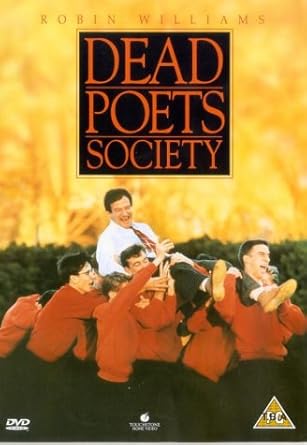
Robin Williams is one of the most recognized names in cinema
due to his involvement in Jumanji, Night at the Museum, this list goes on and
on. One of his films, Dead Poets
Society filmed in 1989, has touched many people of different backgrounds. The
film takes place at a prestigious private school for young boys where the new
unconventional teacher Mr. Keating (Robin Williams) has begun to teach English
for the academy. Mr. Keating is a unique type of teacher who chooses to stray
from the traditional education path that many of his colleagues have taken.
Traditional education as portrayed in the film is teaching
students through strict discipline and compliance to the system focused on
training students to absorb the material they are being taught. In a way the
traditional teaching way is meant to teach students to not question authority
and instead accept authority, the rules, and to conform with the way things are
and have been. The alternative and unconventional teaching methods were opposite
of the traditional. The students, as Mr. Keating portrayed, were free to think
for themselves, question authority, and to be individuals.
One of the most memorable aspects of the film itself was the
unconventional teaching methods that collided with the traditional teaching
methods accepted by the faculty at the school. Both methods attempted to yield
different outcomes for what “success” means to various students. One of the
questions the film poses for the audience is the following: Does conformity
equal success?
Conformity in the film is an important area of interest. In
an early scene, the students are seen reciting the school mantra “Tradition,
Honor, Discipline, and Excellence”. In a way, the students are portrayed as
robots, monochromatic by the same color of their uniforms, and extremely bored
by the sound of their dull voices. Their
entire education in this school, by the cinematic portrayal of this scene, is
meant to be the same because in this “training” they all share the same concept
of what success is, which the teachers and parents identify as being an
academically strong student, getting into an Ivy League school, and obtain a
great job.
Defying conformity is also prominent, in an early scene
where Mr. Keating introduces himself on the first day, the students learn to
view life through a different angle by standing on their desks. He then has one
of them read from the first page of their poetry page which attempts to
mathematically graph good poetry from bad poetry. To express his disdain to
this concept, Mr. Keating has the students tear out that page and many more.
The students hesitate since the idea of ripping pages out of a textbook is
almost “taboo”, but eventually the students begin to enjoy it. This scene also introduces the idea of career
aspiration such as Doctors or Lawyers and introduces the students to the
importance of other aspirations such as artistry, poetry, and passion. In its
own way, society labels medical and legal careers as superior to artistry, Mr.
Keating did not attempt to destroy that idea rather he intended to show them
that there is more to the world and themselves than being doctors or lawyers.

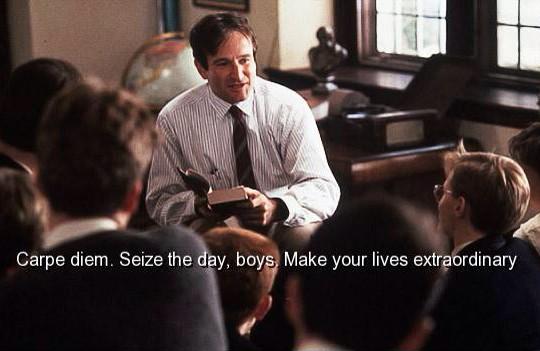
(A picture of a scene where Mr. Keating teaches the students to look at life and learn through a different perspective in order to defy the ordinary)
The film also introduces the good side of conformity by
introducing the father of Neil Perry. Neil wanted to be an actor, but his
father would not allow it and wanted his son to pursue a “real” career.
Conformity in this sense was needed as his family was not wealthy and his
father only wanted his son to have the financially stable future that he did
not. This kind of conformity was honorable and necessary for the family.
Mr. Keating was an anomaly at the school who challenged his
students to think beyond what is expected of them and to find their own
expectations of themselves. Conformity, in my opinion, does not equal success.
Traditional teaching methods do not work for all students and should not be
modeled to make everyone alike. In an essay titled “Reclaiming the Social:Pedagogy, Resistance, and Politics in Celluloid Culture”, Henry Giroux argues
that the culture of the school does not expect the students to know how to
think on their own but rather the parents and faculty there create a culture
where the students are expected to be members of the elite. In other words,
they are expected to be powerful, privileged, and wealthy leaders of tomorrow.
Mr. Keating, disrupts that culture by introducing free thought to the students.
Being the minority amidst an entire body of faculty and parents who disagree
with his unorthodox teaching practices, Mr. Keating ultimately does not last
long in the school.
The phrase Carpe Diem or
Seize the Day, frequently used by Mr. Keating is unorthodox and goes against
the conformist views of the school and parents. Carpe Diem refers to the spontaneous, and the students are
encouraged to worry less on the future and live in the present thus stating
that success is only limited to what you allow it to be. Giroux also states
that the older generation and the younger generation have different views on
what success truly means when interpreted by both. This is true because the
older faculty are only focused on teaching their way to the students, any other
way is unacceptable. Because of this, the students never considered the idea that there may be different ways to do something, to be successful, or to learn.
Does conformity equal success? The answer is no but yes. There
are many ways in which one can view conformity as a terrible ideology yet in
the case of Neil Perry’s father, conformity was essential for him and his
family to succeed. I think today in our day and age both traditional and
alternative teaching practices are acceptable and can be understood. Both ways can
lead to success. No student is identical,
and some are more similar than others. Essentially, success is subjective and
teaching to bring out individuality is possible just as teaching conformity is
possible as well.
Group A - The Veldt and the Digital Divide - Brandon Ince
There comes a time in every person's life, when our brain cells become old and crusty, the synapse fires considerably slower and ideas and concepts that seem used to be easy to understand and wield become foreign and devilishly inscrutable. With old age we become wise and experienced but with that the trade off is flexibility and aptitude to learn. Not to say that we all invariably become obstinate walls of hard held beliefs, more to say that we are not the metaphorical information sponges which we used to be. It becomes more difficult to learn, but despite that the world keeps turning.
Everyday, and now faster than ever, new technologies around the world are being developed for the betterment of humanity, these inventions by and large do succeed in bringing about a better, or at least more advanced civilization. However, the rate in which they come out coupled with a human being's increasing learning deficiency results in some people, or even entire generations, being left behind. This is not a new thing, generation gaps have existed before and by golly they will exist in the future. However still, the generation gap that is occurring now with the advent of the internet, smart phones, and the damnable invention known as Windows 10, is special. Known today as the "digital generation gap" or for those admirers of alliteration simply "digital divide", is the supposed gap between the younger and older generations as a result of the former's ability to more easily adapt and faster and more successfully to technology than the latter. As our world advances in this technological direction, the risks of being left behind are becoming more and more severe and the need to be technologically literate becomes more and more necessary in order to be a functioning contributor to society. Being unable to handle a computer is a very dangerous social position to be in, one can be surpassed, outdone, and even taken advantage of by those why understand the system better. Ray Bradbury's The Veldt is story that explores the most hyperbolic consequence of this such situation.
In this story a father, George, has invested in and moved his family into what is known as a "happy life home" in which every aspect of the house and even life (to an extent) is automated the the miracle of modern technology. This sounds rather nice in theory but the actual living experience for him and his wife, Lydia, proves to leave something wanting, they become more and more uncomfortable in this house to the point where they want to turn the whole thing off. Contrast this to their kids, Peter and Wendy, who seem to be thriving in this marvelous tech-house. Especially fixated on a certain room known as "the nursery" the purpose of which is to create a virtual reality space in which to manifest whatever the users fantasies may be. The kids demonstrate a mastery of control over this space, creating worlds of Aladin and Alice in Wonderland with ease, meanwhile George can't seem to make it manifest anything other than an African veldt populated with bloodthirsty lions. Ultimately, this image of the veldt isn't of George's doing at all and is in actuality a volition of the children, which in the end is used by the children as a tool to kill(?) George and Lydia.
This story, hyperbolic as it may be, is a cautionary tale albeit about raising proper children, but also about the dangers of living in a system you have no grasp of and worse still living in that same system with a person who knows it all too well. Ignorance will always be a source of vulnerability, but if one is completely oblivious to the workings of a unit in which they literally live in - then one is certain to have a bad time. This is not too different from life in our current culture. We are, for better or worse, totally dependent on technology. In the same way George is hamstrung by his children in his own home is the same way folks can get hamstrung in life by children who understand the digital landscape better. It's like being a part of a hunter gatherer society, he who shoots best gets the most food, and if you don't even know what a bow is then you're at a considerable disadvantage.
It's not all gloom and doom - well a situation like that would certainly be pretty bad - but there's nothing really indicating that we're anywhere even close to a society where the older generation is completely run over by the younger by any means. A study published in 1998 showed that a high majority (97%) of faculty at a given institution had access to and was proficient in handling the internet and all of it's useful tools. 97% is a fine number, and in 1998 using such tools was not near the requirement that it is today. As a society we seem to be doing fine in regards to computer literacy.
Except Windows 10 truly is incomprehensible.
Sources:
Kelty, Nina. “Educational Technology Research and Development.” Computer Proficiency: The Digital Generation Gap, pp. 46–61., doi:10.1007/11423.1556-6501
Everyday, and now faster than ever, new technologies around the world are being developed for the betterment of humanity, these inventions by and large do succeed in bringing about a better, or at least more advanced civilization. However, the rate in which they come out coupled with a human being's increasing learning deficiency results in some people, or even entire generations, being left behind. This is not a new thing, generation gaps have existed before and by golly they will exist in the future. However still, the generation gap that is occurring now with the advent of the internet, smart phones, and the damnable invention known as Windows 10, is special. Known today as the "digital generation gap" or for those admirers of alliteration simply "digital divide", is the supposed gap between the younger and older generations as a result of the former's ability to more easily adapt and faster and more successfully to technology than the latter. As our world advances in this technological direction, the risks of being left behind are becoming more and more severe and the need to be technologically literate becomes more and more necessary in order to be a functioning contributor to society. Being unable to handle a computer is a very dangerous social position to be in, one can be surpassed, outdone, and even taken advantage of by those why understand the system better. Ray Bradbury's The Veldt is story that explores the most hyperbolic consequence of this such situation.
In this story a father, George, has invested in and moved his family into what is known as a "happy life home" in which every aspect of the house and even life (to an extent) is automated the the miracle of modern technology. This sounds rather nice in theory but the actual living experience for him and his wife, Lydia, proves to leave something wanting, they become more and more uncomfortable in this house to the point where they want to turn the whole thing off. Contrast this to their kids, Peter and Wendy, who seem to be thriving in this marvelous tech-house. Especially fixated on a certain room known as "the nursery" the purpose of which is to create a virtual reality space in which to manifest whatever the users fantasies may be. The kids demonstrate a mastery of control over this space, creating worlds of Aladin and Alice in Wonderland with ease, meanwhile George can't seem to make it manifest anything other than an African veldt populated with bloodthirsty lions. Ultimately, this image of the veldt isn't of George's doing at all and is in actuality a volition of the children, which in the end is used by the children as a tool to kill(?) George and Lydia.
This story, hyperbolic as it may be, is a cautionary tale albeit about raising proper children, but also about the dangers of living in a system you have no grasp of and worse still living in that same system with a person who knows it all too well. Ignorance will always be a source of vulnerability, but if one is completely oblivious to the workings of a unit in which they literally live in - then one is certain to have a bad time. This is not too different from life in our current culture. We are, for better or worse, totally dependent on technology. In the same way George is hamstrung by his children in his own home is the same way folks can get hamstrung in life by children who understand the digital landscape better. It's like being a part of a hunter gatherer society, he who shoots best gets the most food, and if you don't even know what a bow is then you're at a considerable disadvantage.
It's not all gloom and doom - well a situation like that would certainly be pretty bad - but there's nothing really indicating that we're anywhere even close to a society where the older generation is completely run over by the younger by any means. A study published in 1998 showed that a high majority (97%) of faculty at a given institution had access to and was proficient in handling the internet and all of it's useful tools. 97% is a fine number, and in 1998 using such tools was not near the requirement that it is today. As a society we seem to be doing fine in regards to computer literacy.
Except Windows 10 truly is incomprehensible.
Sources:
Kelty, Nina. “Educational Technology Research and Development.” Computer Proficiency: The Digital Generation Gap, pp. 46–61., doi:10.1007/11423.1556-6501
Sunday, April 1, 2018
Bonus 10- It's Not Okay ~~Dianesa Sanon
I've written and rewritten this response but I think i've settled with this as an answer: why is r*** inserted into the story? How in depth is it is it described and how long does it run in the story? I was getting ready to say that writing in rape into stories is wrong no matter the premise but I think of the book The Lovely Bones and think that without it it wouldn't be as powerful as it was without, God forgive me, the r**ing of the little girl. In that book it creates a monster image for her killer and we loathe him. The book makes you want the pig to be found out and locked away. You get the chance to sympathize with the little girl. On the other hand, r***, more likely than not, doesn't need to be given a stage. I remember watching a movie on Netflix and the main lead was handcuffed to bed in a cabin far from any nearby town while her husband was dead on the floor after suffering a viagra induced heartattack (no, I will not be explaining further). The women crashes into a nervous breakdown after a hungry dog starts eating her late husband and the serial killer stalks the outside window and because that wasn't fucked up enough the writer includes a r*** that she was supressing from her childhood and hinted at it right before the husband died via attempted marital r***. I was super uncomfotable watching it. It wasn't needed. The story was messed up beyond all hell and the addition of r*** in the mix felt as though the author just wanted it to write it in just because. Yes, r*** is a big part of history but its something that shouldn't have to be relived constantly. People don't constantly write about mass genocides. If anything, writing about r*** is done because the author knows that there is always going to be a large majority of, mostly men, who want to see a woman struggle and taken against her will. Hardly ever will you see a screenplay of a grown man r**ing a child because thats a taboo line to cross. R*** is written in for the pleasure of the people who enjoy that kind of twisted thing and to simply put it: as long as there are consumers there are producers.
Bonus 9- Who Has the Right ~~ Dianesa Sanon
Biographies and memoirs always have some sort of fictitious aspect to it. No story is written exactly how it was experienced the first time and if you really want to get technical, the human memory makes errors all the time. Someone will always dull or excite certain aspects of someone's life. Especially when the story is written by the author themselves details that are less than are left out or added regardless of how "honest" the author was trying to be while writing it. Cases like that are, to be considered as whatever. the authour who experienced the trauma/joy/comedy/whathaveyou can write it however they choose because that is their experience to tell. How they remember and retell it is as authentic as it will get. No one would tell Elie Wiesel or Erin Gruwell and her students that they have no right to retell their experiences and publish it.
On the other hand, cases where an author is writing on behalf of someone else walks along a very thin line. On one end, the retelling can be done correctly- being mindful of the person, group, tragedy, or whatever it is that they're representing. Research is usually done, outside resources used, interviews conducted. The piece is put out only after an amount of careful consideration. It's like a vegan burger that tastes like meat; it's not the original but its pretty damn close to the real thing. The woman who wrote Wonder definitely toed past the line that puts you in the wrong when it comes to story retelling. Although she probably meant well the book she wrote was based on assumptions. In an interview, she says that she researches for a couple of weeks but never did she actually take the chance to talk to someone who lives with the condition. Her intent was to make the boy in the story "a strong little fighter" but people mostly pity him. after that book became a hit movie a kid in my school with the same facial deformity was overtly pitied and people treated him like a child, calling him "strong" and impressed that he could be so "positive despite his face." Another example is both the book and the Netflix series 13 Reasons Why. The author is a man who was accused of sexual harassment. What gives him the right to them to write about a girl who commits suicide due to rumors that fly around that make her look like a slore? What does he know about what goes on inside the head of a teenage girl when teenage girls don't even know what the hell is going on their own heads. To make matters worse, Selena Gomez, who probably had her share of mean comments hurled at her, adopted the book into a Netflix series and the severity of suicide fell tragically. In a short time memes popped up and Hannah Baker was no longer the girl who was so distressed that she took her life she was #hellasavage for leaving tapes behind to burn the people who made her feel like shit. Although she probably had good intentions she majorly fucked up, excuse my Chinese. As someone who has and still is fighting to want to keep living the entire show is a slap in the face. To watch people cackle and giggle and pantomiming slitting their wrists is embarrassing because without knowing it, they're mocking me. I can't even bring myself to watch the series.
I guess the person who has the right to tell a story that isn't originally theirs depends on their intention. If they mean well, truly mean well, and are putting conscious effort into trying to produce something that is honest to goodness"helpful not hurtful" (Brendel, Liberty North Sculpture 2014).
On the other hand, cases where an author is writing on behalf of someone else walks along a very thin line. On one end, the retelling can be done correctly- being mindful of the person, group, tragedy, or whatever it is that they're representing. Research is usually done, outside resources used, interviews conducted. The piece is put out only after an amount of careful consideration. It's like a vegan burger that tastes like meat; it's not the original but its pretty damn close to the real thing. The woman who wrote Wonder definitely toed past the line that puts you in the wrong when it comes to story retelling. Although she probably meant well the book she wrote was based on assumptions. In an interview, she says that she researches for a couple of weeks but never did she actually take the chance to talk to someone who lives with the condition. Her intent was to make the boy in the story "a strong little fighter" but people mostly pity him. after that book became a hit movie a kid in my school with the same facial deformity was overtly pitied and people treated him like a child, calling him "strong" and impressed that he could be so "positive despite his face." Another example is both the book and the Netflix series 13 Reasons Why. The author is a man who was accused of sexual harassment. What gives him the right to them to write about a girl who commits suicide due to rumors that fly around that make her look like a slore? What does he know about what goes on inside the head of a teenage girl when teenage girls don't even know what the hell is going on their own heads. To make matters worse, Selena Gomez, who probably had her share of mean comments hurled at her, adopted the book into a Netflix series and the severity of suicide fell tragically. In a short time memes popped up and Hannah Baker was no longer the girl who was so distressed that she took her life she was #hellasavage for leaving tapes behind to burn the people who made her feel like shit. Although she probably had good intentions she majorly fucked up, excuse my Chinese. As someone who has and still is fighting to want to keep living the entire show is a slap in the face. To watch people cackle and giggle and pantomiming slitting their wrists is embarrassing because without knowing it, they're mocking me. I can't even bring myself to watch the series.
I guess the person who has the right to tell a story that isn't originally theirs depends on their intention. If they mean well, truly mean well, and are putting conscious effort into trying to produce something that is honest to goodness"helpful not hurtful" (Brendel, Liberty North Sculpture 2014).
Subscribe to:
Posts (Atom)
-
 The Pirates of the Caribbean: The Curse of the Black Pearl was the first of a now popular series. It romanticized pirates' legend...
 -
 The 2008 Marvel movie IRONMAN is a movie about a brilliant American industrialist Tony Starks, performed by actor Robert Downy Jr, who ...
 -
 The Lottery by Shirley Jackson is a thrilling masterpiece created in 1948. This short story starts off by welcoming clear sunny skies, gr...