Sunday, April 8, 2018

Post 4, Group B - The Look and Feel of Ready Player One, by Jared Islas

Over spring break, I went to see Ready Player One with my dad. I hadn’t heard really heard much about the film but my dad was a big fan of the book (he said he has read it multiple times). The movie is about a future where a VR-like technology captures the mind of the entire population. In Ready Player One, this comes in the form of a virtual reality world called The Oasis. The main character of the movie, Wade Watts, explains that, “People come to The Oasis for all the things they can do, but they stay for all the things they can be.” When in The Oasis, people can customize their avatar to be anything they want, any gender, any body form, any character, etc. When I was watching the movie, I found it a bit jarring of how different the in-game scenes (which were all CGI) were compared to the real world scenes (which were live action). They used two completely different styles and color pallets. This was until a scene in the middle of the movie, that this post will dive into, combined these two dueling styles in a meaningful and simple way.


Much of the beginning of the film follows Wade (as his in-game avatar Parzival), and his in-game friends Aech, Artemis, Sho and Daito trying to beat other players in the game at a challenge to find an “easter egg” left by the game’s creator. The group of friends, led by Wade are successful, and begin becoming popular among other players but also begin to be targeted by a private company who sends out armies of players into The Oasis to be the first to find the easter egg which grants the winner exclusive ownership over the entire Oasis.

Wade begins falling for Artemis due to the fact that they share similar interests and the desire to be the first to find the easter egg. This happens despite the fact that they have never met in real life and all Wade knows of her is her avatar. When Wade tells Artemis about his feelings in-game, she expresses her dismay explaining that he does not know her at all and he’s only falling in love with the idea of her, or only what she wants him to see/know.

Eventually after some more twists and turns, Wade finally meets Artemis (whose real name is Samantha) in the real world. This was one of my favorite parts of the movie because the look and feel of the scene is vastly different than anything from the film up to this point. Like I said, the majority of the beginning of the film was seen from the perspective of the in-game characters in The Oasis, so everything was bright, colorful, flashy, etc (as seen in the trailer above). Conversely, the live action portions of the film up to this point mostly followed Wade in and around the stacks (where the people live in this future) and the back of a van where he goes online to The Oasis. Both of these settings (pictured below) have a dark, dirty, industrial like feel to them.


Both of these look and feel completely different than what this scene looks and feels like. In the scene, Wade and Samantha are sitting on the top of a rooftop surrounded by greenery. The picture below is the best I can find of the scene, but you can still see the contrast between the other live-action scenes and the animated scenes. I think Steven Spielberg, the director of the movie might have chose to have this scene blend the two color palettes of the film together to depict the meeting of in-game friends in the real world.  


This scene is also incredibly slow, but in a good way. Compared to other action packed portions of the film, the scene focuses on the two characters and their conversation about their relationship and The Oasis. Another thing that is different about this scene compared to the rest of the movie was the absence of a score. The scene was silent and calm. Again, I think Spielberg did this to express how everyone in this world is so caught up in The Oasis, that they never just take a minute to live in the moment. 

It is with this scene that Wade’s opinion on The Oasis changes, with the help of Samantha. Rather than seeing it as a fun game where everyone spends every waking moment of their life doing anything they want, he begins to see that there is things, and people, in the real world that are worth experiencing. This sentiment is best described by Justin Nordstrom in his article about the book that the movie was based on written by Ernest Cline. Nordstrom says that, “Cline’s Oasis setting is simultaneously utopian and dystopian—as it enhances education and ignites a player’s imagination on one hand, and leads to abandonment of the world’s pressing needs on the other.” I understand the quote “abandonment of the world’s pressing needs” in a number of ways.  This refers to not only the world’s pressing needs, but also people’s pressing needs like real relationships, real experiences, or simply reality. 

Works Cited
Nordstrom, J. "“A Pleasant Place for the World to Hide”: Exploring Themes of Utopian Play in Ready Player One." Interdisciplinary Literary Studies, vol. 18 no. 2, 2016, pp. 238-256. Project MUSE, muse.jhu.edu/article/618474.

Bonus 9, Who Has The Right? by Jared Islas

This particular question is quite tricky. In fact, it is so much on my mind that there have been some instances that I personally feel uncomfortable responding to a prompt or even commenting on a subject because I don’t feel like I have any knowledge or connection to the issues being discussed. This probably has more to do with my personality but I think it is something that a lot of people might feel the same way about.

Looking at the concept outlined in the prompt for this bonus, I don’t think that it is or was okay for this woman to write a story about a child with physical deformities based off of her and her children’s brief experience with another child. However, I do wonder if the woman who wrote the story and ultimately sold the film rights to her story did so without ever talking to families, children or medical professionals that were directly affected by this disability or similar ones. I think that this is an extremely important question that would certainly make R.J. Palacio, the woman who wrote the book’s, story more credible and easier to accept her as an author of this story. 

I briefly searched the internet for any instance of Palacio mentioning if she had been in discussion with people directly associated with the disability and disappointingly couldn’t find any concrete answers. I want to believe she has because otherwise it would be a bit concerning considering this book is extremely popular and Palacio profited off of not only the original Wonder book, but also 3-4 more of her books which focus on the same characters and disabilities, AND the film based off of her book. In an interview with NPR, Palacio did say that after writing Wonder, she has become “an advocate for children born with craniofacial differences.”

Obviously not every single person who experiences something worth retelling in a book or movie is interested or “talented” enough to be able to write their story for a wider audience. Therefore, I see the necessity for proven authors and screenwriters to write these stories for these people. My only stipulation would be that these authors and screenwriters must have some connection to the story they wish to write about. I would hope that they would be able to speak to the person, people or people related to or close to the person whom the story is being based off of. This would give them not only a personal connection to the topic they’re writing about but also give them the opportunity to ask questions about the topic to a real living subject rather than information they found just from research.

In a piece for the New York Times, Anna Holmes discusses this topic by comparing empathy and exploitation but also says that, “Sometimes empathy and exploitation find expression in the same place.” I think that this perfectly sums up my views on this issue. Her books and movie may be telling an empathetic story but no matter what way you look at Palacio’s scenario, she has become who she is today, and profited, off of a child with disabilities.
Sources:

Friday, April 6, 2018

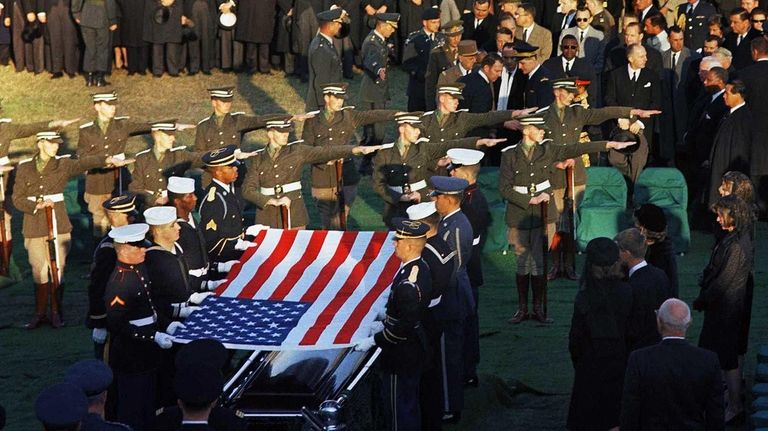
Blog Post 4 Group A: It's An Honor by: Alan Donoho


Perspective has always been a major aspect within communicating a message. Whether it is a movie, a novel, or an article in a newspaper, perspective takes on one of the most important roles for making a message understood. It’s an Honor by Jimmy Breslin is no different. Within the story, Breslin uses Clifton Pollard to represent the common people. However, “in the past, journalists have always focused on just a small range of sources when gathering information for their stories. Most attention went to elite actors, while ordinary citizens were judged of minor importance resulting in only a few common people being mentioned in news output” (Keyser). The focus on the elite makes it harder for a common person to be able to relate to the issue trying to be presented, especially if it is an issue of great importance that revolves around a select few elite. Breslin’s use of perspective takes a major issue such as John F. Kennedy’s death and makes it more personable and relatable to the common people. This article not only conveyed the people’s distraught for John F. Kennedy’s death, but also illustrated their love for the man through the reverence of the dirt in which he was to be buried in and the honor that it was to for Clifton Pollard to dig his grave. Usually one of the few times that the common man is used as a source of information is “when an ordinary citizen serves as a spokesperson for a civic movement consisting of his peers. Especially when such a group of citizens is critical of an elite’s decisions or behavior, the person voicing dissatisfaction is a welcome source” (Keyser). Through the basic use of the common man, journalist can manipulate the view point to tell the story that they wish to be shared while satisfying the need that could be perceived by common people to have their voices heard. Breslin gives another perspective that the audience receives is that of Jackie Kennedy, the wife of John F Kennedy. 

It would have been most popular to write about Jackie Kennedy, her reaction, and how strong and sad she must be to have lost her husband. However, she took up but a small part of the article. A small excerpt from the article shows this, “Everybody watched her while she walked. She is the mother of two fatherless children and she was walking in to the history of this country because she was showing everybody who felt old and helpless and without hope that she had this terrible strength that everybody needed so badly. Even though they had killed her husband and his blood ran onto her lap while he died, she could walk through the streets and to his grave and help us all while she walked” (Breslin 468). Within this article her importance is shown, along with her strength and her duty. Nevertheless, the main perspective from the story was that of Clifton Pollard. Through Breslin’s writing the audience can see that “the demand to contact an elite source in every case is weakening (Brennen, 2009), decreasing the elites’ power to control the news agenda (Bivens, 2008), but the basic societal structures remain unchanged in substance (Fuchs, 2009). As a result, citizens may have gained more importance in the news output, but they remain rather unimportant as actors even in the current context (Dimitrova and Stro¨mba¨ck, 2009)” (Keyser). Rather than being important, being strong, and having a duty to the people, Pollard was characterized as being nothing more important than your common man. He was shown as a simple worker that had to work an extra day, but from his perspective the audience, of which the majority would be common people like Pollard, can see the honor felt by the man towards being involved in the burial of the fallen President. From the article the audience is shown that “Clifton Pollard wasn’t at the funeral. He was over behind the hill, digging graves for $3.01 an hour in another section of the cemetery. He didn’t know who the graves were for. He was just digging them and then covering them with boards. ‘They’ll be used,’ he said. ‘We just don’t know when”’ (Breslin). Pollard was not allowed at the funeral as he was not important enough. That did not change the love and respect that Pollard felt for the dead President, rather it showed the situation that most common people were in. Their world could not stop to grieve for the fallen man despite their love and honor felt for John F Kennedy. They had to continue to do their jobs even if they were like Pollard and had no idea or control.
Perspective has been and shall always be a major influence on the understanding of ones writing. By forming the connection with the common people from writing from the point of view of a common man, Breslin was about to relate back to his target audience. By not writing from the view point of a person from the elite, Breslin was able to communicate the grief, love, and respect that common people like Clifton Pollard felt when mourning John F Kennedy. If he had written the story from the point of a person of the elite, then the affect would have felt almost forced because of the duty and strength that the elite are generally assumed to have.

Sources:
Breslin, Jimmy, and New York Herald Tribune. “Read Breslin's Signature 1963 Column about           
          JFK's Gravedigger.” Newsday, Newsday, 20 Mar. 2017, www.newsday.com/opinion/digging-  
          jfk-grave-was-his-honor-jimmy-breslin-1.6481560. 
De Keyser, Jeroen and Karin Raeymaeckers. "The Printed Rise of the Common Man." Journalism 
           Studies, vol. 13, no. 5/6, Oct. 2012, pp. 825-835. EBSCOhost,
           doi:10.1080/1461670X.2012.667993.
Kerrane, Kevin, and Ben Yagoda. The Art of Fact: a Historical Anthology of Literary Journalism.                  Simon and Schuster, 1998. It's an Honor By: Jimmy Breslin


Bonus 9 by Kyra Moore


The concept of “second hand” story telling has always been skeptical and an uneasy topic for me as well. I too battled with discerning with who was “able” to speak on certain topics and/or events that are transpiring or have transpired. For example, if there was a writing composed by a white man who spoke of the times of the Cherokee removal-is it his right? This is easily comparable to the example given in the prompt but also to work(s) that we have discussed in class- the poems of Sherman Alexie are a perfect example. He was an “outsider,” so to speak, but he was immersed in a marginalized culture.
This is something that I mentally battled with until I came to a concrete consensus on how I felt on the matter. Actually, the readings that we have read in class and the conversations about the matter actually helped me sort out of my feelings pertaining to the matter. I now have a consensus about how I feel about “outsiders” speaking on events that have not happened within their particular culture.
While I do feel like the perspective of the marginalized people should be most respected as it is the most authentic, I also feel as if every perspective or angle of an event or issue should also be respected. I feel that there is value in differing perspectives pertaining to a matter if it is conducted in a respectful manner. If everything is done with respect for the event and the people involved, I could definitely see there being a benefit. Using Sherman Alexie as a perfect example, his works are very respectful of the cultures that he worked with and almost look at those cultures in reverence, so to speak. One of the reasons why I praise Sherman Alexie and his work is because he intentionally chose to immerse himself in a number of cultures. I think that should be a requirement of those who choose to speak of specific events.
Using the example of the child with facial deformities in Wonder, I feel as if the author is justified in writing the work that she did. She was affected by something that she actually witnessed and saw the injustice and wrong behavior surrounding the event, so she felt so inclined to write about it. In reality that is what I think art and freedom of speech is, talking, writing or producing art that is meaningful to you- especially if it promotes actions meaningful to the greater good.
These examples are a testament to the current philosophy that I now have on the matter- respecting all perspectives that are made in respect to the event and people involved. I actually feel that there should be more works like Wonder and Sherman Alexie’s poems. This could potentially change the tone of literature and also change the tone of social interactions as a whole.
Overall, while the voice of the oppressed is very powerful, other voices that have good intentions but different perspectives should also be respected and appreciated.

Resubmissios Essay

Throughout this essay I will be discussing the skills that I need to work on with it being personal skills and skills that pert...